Food can be more than just the nutrients you need to sustain life. Food can have many different meanings and uses for different people and cultures. Whether it be for ceremonies, religion, tradition or society; we all eat different foods at different occasions many times for reasons we are not aware of. This will be a series of blogs where I will go into detail about specific foods and dishes and what they culturally represent to the people who eat them. This week, I will focus on Chinese dumplings, or jiaozi. This is a dish that you can get at almost any Chinese restaurant any time of the year, but they have a deeper and more meaningful origin that many people don’t know.
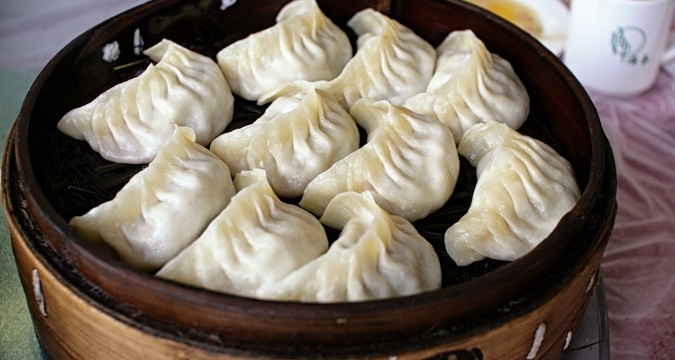
Dumplings were first thought to have been made in the Eastern Han era (25-220 AD). One origin story is that they were first made as a traditional medicine for frostbitten ears. The story goes that a doctor was traveling and noticed that many of the poor people didn’t have the proper clothing for winter. Because of this he gave them lamb dumplings served in a broth in order to keep them warm up until the New Year. Today dumplings are eaten on the New Year to celebrate as well as to keep good health during the New Year. (1) Another reason they are eaten on New Years Eve is because they are thought to look like the currency used during the Ming Dynasty, so they are eaten to bring prosperity in the upcoming year. Many times, a coin is hidden inside one of the dumplings so that one person may have extra luck in the new year. (2)
Today, dumplings are eaten just about any day of the year for any meal. They have spread throughout Asian history, with places like Japan, Nepal and Korea having their own renditions of a stuffed dumpling. However the tradition still remains of eating dumplings on the eve of the Chinese New Year. The importance of the dumpling in China goes back at least 1,700 years where archaeologist found fossilized dumplings in tombs. (3) The fact that people felt the need to be buried with dumplings shows how much this food meant to them.
With how high paced and busy life can be in 2020, it is easy to not think much of food. It is something that gets you through the day, fuel that gets you from point A to point B. It might even seem alien to think of food as meaningful or have importance outside of keeping you alive. Understanding the origin and the stories behind a certain food or dish can help give someone a connection to their food and care more about it. Not only that but it can be a connection between a person and a culture foreign to them; a gateway into their way of life and a way to begin understanding people different from you.
1. https://www.austinchronicle.com/food/2013-02-15/seeking-xlb/
2. https://www.nytimes.com/1995/01/25/garden/dumplings-for-a-lucky-year-of-the-pig.html
3. https://www.thedailymeal.com/archaeologists-ancient-dumplings-xinjiang-china/21615
 The Cultural Chef