What food brings back memories of your childhood? Or just makes you feel contented inside after eating it? Comfort food is something that everyone has, something that has a certain nostalgic value to us that makes us love eating it. The funny part is that to get these feelings, the food itself doesn’t necessarily have to taste good objectively. An example of that from my life is mac n cheese. To me, mac n cheese has to come from a box. The super cheap stuff you buy in stores with the cheese powder, that’s the cream-the-crop to me. I know that there are much better mac n cheeses out there, but because they don’t have the connotation that boxed mac n cheese has, they aren’t as good to me. This is where I think a lot of places go wrong and where a lot of people in general go wrong. We have this assumption that food has a “correct” way to be cooked. Or that people who have studied and cooked with food for a very long time make better food than those who just start out. Food and eating is not just a physical experience, its a cultural and psychological experience as well. It is a psychological experience because while you eat, you make connections with other things that might be going on in your life. Maybe you’re on your first date with your future wife at a crappy Italian restaurant, and that watered down sauce on your spaghetti tastes so amazing because of the memory you associate it with. For me, I love boxed mac n cheese so much because it reminds me of summers as a kid. I remember my mom would make it for my brother and I as a quick lunch before we went outside and played with the other kids in our neighborhood. Culturally it might be different simply because different cultures favor certain kinds of foods to others. So you might have grown up eating something super spicy and love it, even though in the culinary world, super spicy foods aren’t considered that good because it masks other flavors.
When I think of true comfort food, however, it is the food that my grandma would make for us and that my mom learned to make from her. Recipes that were passed down in the family from before we immigrated to America. My great-grandmother was a first generation Polish-American, meaning that she was in the first generation of her family that was born in America. When they moved to America, they brought over traditions from Poland including recipes that have since been passed down to me. These recipes and culinary traditions include kielbasa, pierogi, gołąbki, kluski, oplatki, and paczki. I will go over each of these in following paragraphs. These foods are what I grew up on and whenever I eat them now I feel so happy and content. We didn’t eat these foods all the time, but they were recipes that that were ours, ones that didn’t come from the Betty Crocker cookbook. I think that is why they stick out to me the most, the personal connection that they had with my family and the history behind them gave these foods more meaning.
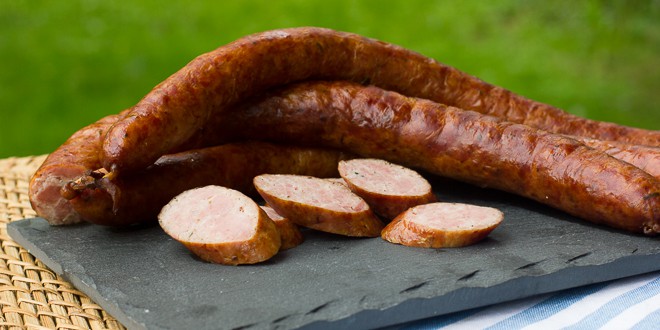
Kielbasa, or Polish sausage is probably one of the most well known Polish dishes to most people. My family rarely made this for themselves, as the process was very long and involved, but we bought them from friends who made them by hand. Kielbasa was always on the menu during Christmas and Easter dinners. It was one of my favorite dishes as a kid, especially with the sweet chili sauce my grandma would make to put on top of it. When I think of Easter and Christmas, I don’t really think of ham or turkey or any of the more popular meat choices for those holidays, even though we had them. For me its the kielbasa and chili sauce that I associate with those holidays.
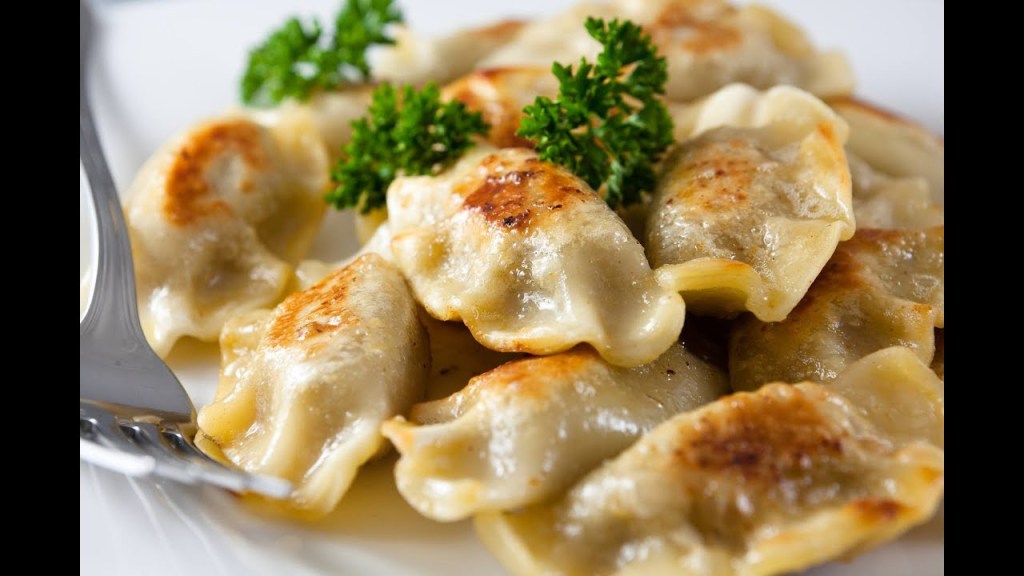
If you knew what a Polish sausage was, there’s a good chance you know what a pierogi is. Pierogi’s stuffed with potatoes were my absolute favorite dish as a kid. We had them both store bought and hand made. It wasn’t until later in my teens that I discovered they could be filled with things other than potato and I had mushroom and sauerkraut pierogis and cheese pierogis. These are very accessible since they are basically just dumplings, however the dough is very specific in that it is heavier and is really what sets them apart from other types of dumplings.
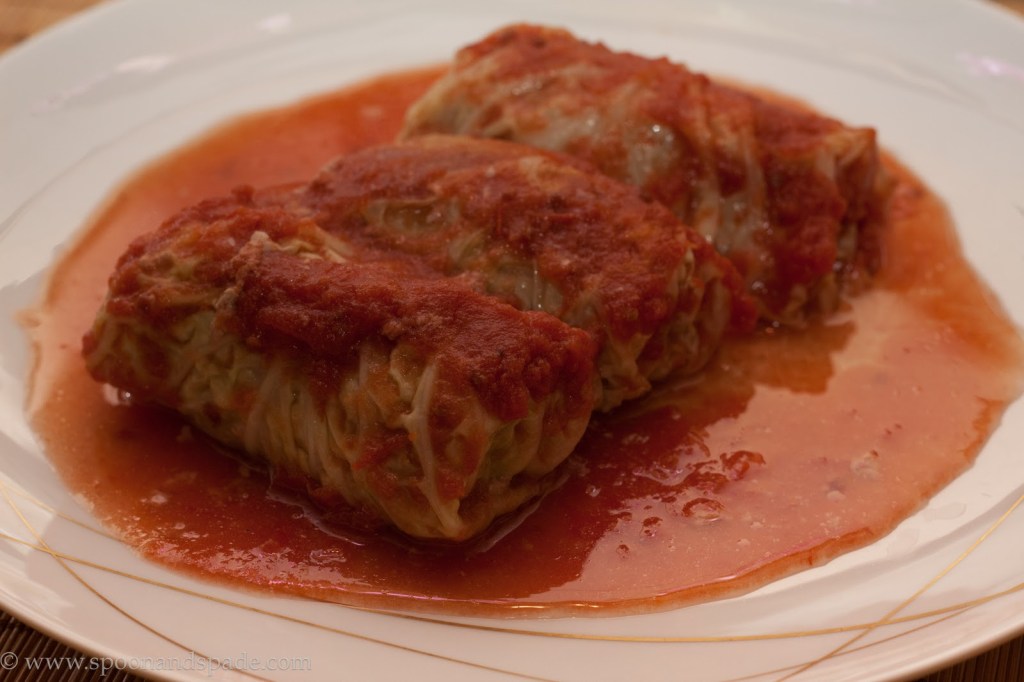
Gołąbki, better known as cabbage rolls, was a dish I had to grow into. I liked almost everything about them as a kid, the ground beef and rice inside, the tomato sauce drizzled over top of them. The only thing that I hated about them was the cabbage wrapped around them. I remember peeling the cabbage off to just eat the insides in the sauce. Because of this, we never really had these all that often when I was younger. As I got older and my taste buds changed, I started to appreciate this dish more and more to the point where it is now my favorite dish.
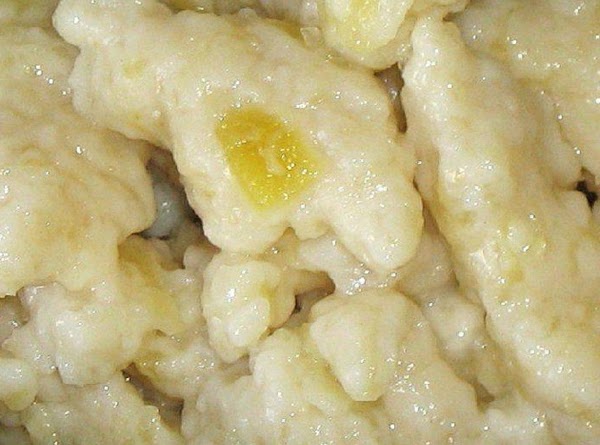
The way my family makes kluski is a little different that what I’ve seen in grocery stores and online. Normally kluski just refers to a potato dumpling, as seen in the picture above. However when we were told “we’re having kluski tonight” it meant a very specific dish. The way we made it was with handmade kluski dumplings that were sautéed with bacon and onions. I enjoyed this dish, but it was my little brother’s absolute favorite Polish dish that we made.
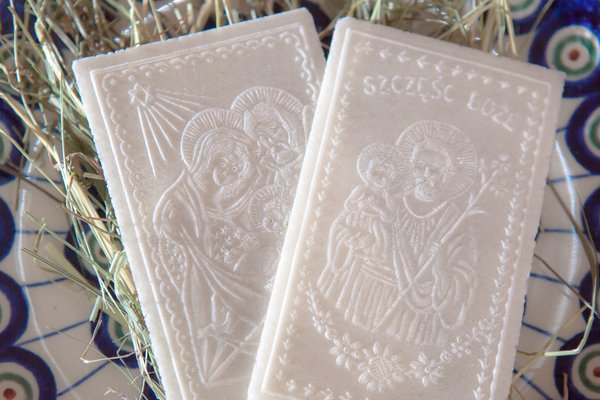
Growing up in a Roman Catholic family, Christmas was always a very important time of year for us. Oplatki is a Polish tradition that emphasizes the importance of Christmas to us. Taken on Christmas Eve, these wafers are the same as the host one would get at mass, but not blessed by a priest. The wafers would have elaborate decorations on them usually depicting the nativity scene. All the adults would split one or two of these wafers amongst each other before eating dinner. The tradition goes that those that the ones you share this wafer with will be the ones you share good times with in the upcoming year.
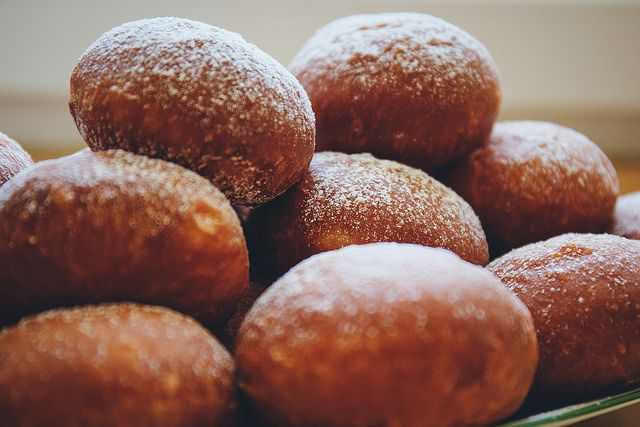
Paczki were some of mine and my brothers favorite treats, but they were only made once a year, Fat Tuesday. It is a tradition to make these fatty, sugary treats on Fat Tuesday since it is the last day before lent, when we would have to fast for 40 days until Easter. Now, as kids we didn’t really fast, we chose one thing to give up for those days (which we usually broke by the end of the first week) but it was a tradition that we kept nonetheless. There are many different recipes for paczki, some are stuffed with jelly or cream and sprinkled with powdered sugar. Ours were just the plain donut, covered with sugar on the outside. You could eat them at room temperature but we always liked them best when they were fresh out the oven or reheated for a couple seconds in the microwave.
Neither my mom or my grandma have ever been professionally trained how to cook. As far as I know, I’m the first one in my family to go to culinary school. But the food that they made me growing up holds more weight in my memory that the best “technically” good tasting food that I’ve had. Food and flavor are both subjective things that are influenced by a lot more than just our taste buds. Where you are, your mood, the memories you’re making all go into your perception of the food you are eating at that time. This isn’t to try and put down or degrade chefs or professional cooks, but merely to dispel the assumption that because you AREN’T a chef or a professional cook doesn’t mean that you’re food can’t be just as good as theirs. And to some people, might even be better.

