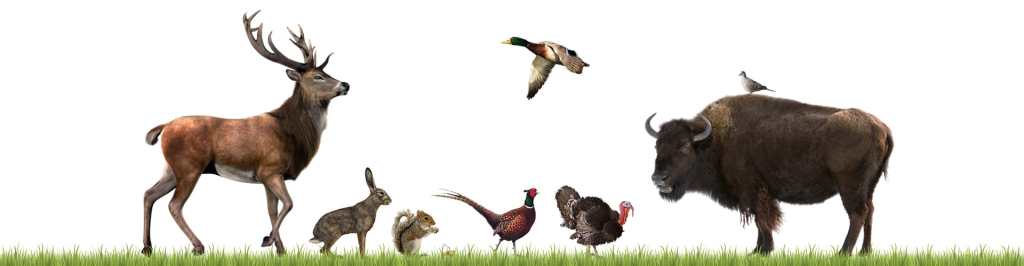
To most of us, getting food to eat requires a short car ride to the grocery store and some money. Prepackaged and convenient, obtaining our food is now the easiest part of the process. That is unless you prescribe to the practice of only eating the meat of what you hunt. This lifestyle is made up of hunters who see that the food system as it is, is unsustainable, unhealthy and cruel to the animals farmed for it. One of the more famous advocates of this lifestyle is Steven Rinella, who has a show on Netflix called “Meateater”. In the series, he documents his hunts for different animals and how he chooses to prepare them. He has also written a few cookbooks on how to prepare wild game animals.

One of the main tenants of this ideology is diversifying your diet. At the average grocery store there are only a handful of species represented in the meat section. Beef, pork, chicken, turkey and cod are among the most popular meats available for purchase. This causes great pressure on those populations to support the masses of people consuming them, and this is why they are now farmed commercially. This is where you see all the videos of slaughterhouses with animals on conveyor belts being sent to the “killing floor”. Not only that but because there is such high demand for the meat of these animals, companies need to “produce” them at a very high rate, using corn as feed and hormones to help them grow faster. The static diet that these animals are fed and the high stress of the environments they are in cause the quality of the product, both in taste and nutrition, to go down. This is where wild game has an advantage. Because they are living in nature, their diet is varied creating an overall healthier animal. And the stress of being in close confines and being sent to slaughter are erased. Hunters provide a quick and comparatively painless death when compared to the commercial alternative. That’s not to say that it is completely painless, but it is better in my opinion.
If you compare what a wild game hunter eats versus what the average American eats daily, you would see that the wild game hunter has a much larger variety of species at least in terms of meat consumption. I think this has to do with hunting seasons. You can’t just hunt willy-nilly all year long for the same thing. That would cause overhunting and a decline in the species’ population. So the year is broken up into seasons where you can hunt certain animals but not others. Some of these seasons overlap as well. In the US, most hunters hunt deer, turkey, ducks, geese, elk, boar, rabbits, squirrels, fish, and pheasant just to name a few. Among those groups there are dozens of different species and subspecies, all endemic to different parts of the country. Not to mention that all of these species occur in abundance all over the US. In fact, in my home state of Wisconsin, the deer population is so huge that they are a nuisance to farmers since they have no natural predators.
Now what does all of this mean? Am I calling for everyone to go out and hunt for themselves? Not at all. Not everyone wants to or has access to the resources to go and hunt, me being one of them. I live in a small studio apartment in downtown Chicago. Not the ideal scene to go hunting in. What I do think we can learn from this lifestyle is to diversify our diets. Studying anthropology in college, I learned about the human diet. One of the main things I took away from that was the importance of diversifying what you eat. A study by the Institute of Food Technologies found in 2015 that there could be a link between dietary diversity and diseases like obesity and type 2 diabetes. So not only is diversifying what you eat good for the environment, it is also good for you. Many people in the culinary world are seeing this too. Chefs like Michael Hunter (appropriate name), Alex Atala, and Martin Picard are all including wild game on their menus in an attempt to draw attention to just how tasty and healthy these meats are. Many of these chefs grew up as hunters themselves and therefore also have a connection with the animals as well.
Which brings me to my last reason for why I think this matters. In previous blogs I have emphasized the importance of being connected to your food. And to me this is the ultimate example of that. Eating wild game goes past just knowing where your food comes from and the stories behind it. In this lifestyle you see your food before it is food, when it is still a living thing. That connection that you make with that animal is so deep, it can’t be recreated when your perception of meat is just a prepackaged product in a refrigerator. If you are responsible for killing that animal, you feel a connection to it that continues when you eat it. It almost becomes a spiritual experience, and many hunters that I know or that I’ve seen are so overcome with emotion that they actually cry when they kill an animal. It is that powerful of an experience and connection to your food that I think we all need. Again, maybe not to that extent. I merely want to show this as an extreme example of connectedness in an attempt to show just how disconnected we are. Any connection is better than none.
 The Cultural Chef