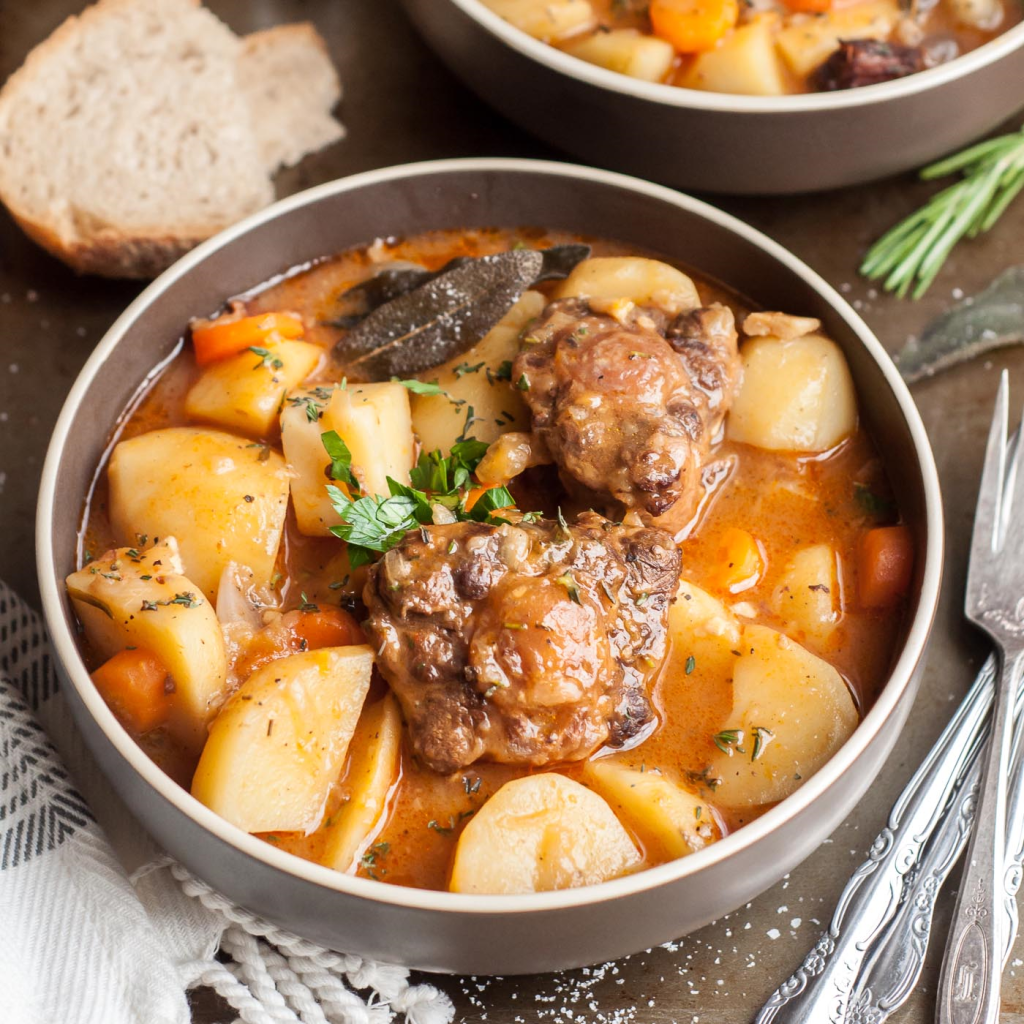
When trying to decide what to write about this week, I had a hard time picking a topic. With the protests going on calling for police reform and justice for centuries of racism and discrimination against the black community, writing a blog about food seemed….insignificant. But as I always try to do here on The Cultural Chef, I intend to use food to achieve a larger goal, or touch on a deeper subject. That’s why this week in my regional foods series, I’m going to talk about Oxtail Stew, a traditional African-American dish. I hope this post achieves my goal to be a celebration of African- American culture, and as always, if I get something wrong I welcome corrections and criticism.
Oxtail Stew is the product of hard times and dates back to the 1700s. Often one of the only parts left over of the cow, the tail would be utilized by slaves in the south to feed everyone. Most recipes that I can find now include onions, carrots, celery, and tomato sauce along with beef broth all mixed up with the oxtails to make the stew. As with all stews, it is cooked for a very long time and is done when the meat from the tail falls off the bone. Because the entire tail is stewed, the collagen in the tail bones acts as a thickening agent so no artificial thickening is needed. This again shows how people will adapt to their environments and given situations and make something unique and delicious from it. Personally, I’ve always loved and been fascinated by stews. They represent both simplicity and complexity. They’re simple to cook, as you just throw everything into a pot and wait. But complex in the flavor that this cooking technique creates. Stews are also really good at feeding a lot of people on relatively small amounts of ingredients. One pound of meat in a stew goes a lot further than one pound of steaks does.
For so many people, especially in northern states, soul food consists of fried chicken and barbecue. And while those are the most popular dishes, there are so many more dishes that make up soul food and give it so much more depth. One commonality in soul food is taking less-than-desirable cuts of meats and making something absolutely amazing out of it. The ribs on any animal are usually seen as tough and inedible, but BBQ ribs are fantastic and as tender as any other cut of pork. The legs and thighs of chickens used to be thrown out and used for scrap food, but seasoned and battered they’re delicious. In the United States, soul food has the most stories to tell. It’s history goes deep and in my opinion you can’t fully understand the US without knowing those stories as well. The stories of the oppressed and impoverished are just as, if not more important than what the history books tell us. As a white male, I will never understand what it is like to be black, or any other minority living in the United States for that matter. However my aim is to be an ally for them and a tool that they can use to help them gain REAL equality. Whether it is using my platform to spread black culture or speak out against injustice. Even if it is just to sit and listen. This issue is specifically one where I think we can use food as a tool for healing. Not just by eating it, but by using it as a tool for understanding and care for one another.
1. https://www.justapinch.com/recipes/main-course/main-course-beef/southern-oxtail-stew.html
 The Cultural Chef