Halloween brings back memories of excitement about Trick-or-Treating and dressing up as the scariest thing I could think of that year and seeing the costumes of my friends. How, as we got older, we would ride our bikes to different subdivisions that had “the good candy” and playing pranks on my friends to scare them. Now that I am too old for Trick-or-Treating (apparently), I enjoy going home when I can and helping my parents decorate their front yard as creepily as I can to scare as many Trick-or-Treaters as I can. Little did I know growing up that all of these traditions are rooted in ancient Celtic traditions. So in honor of my favorite holiday, I present Food Traditions Surrounding Halloween and Samhain.
Origins
Samhain is a pagan Celtic festival marking the beginning of winter, celebrated from October 31st to November 1st every year in the areas of Ireland and Scotland. This date seems of little importance in terms of the crop season, however early Celts were pastoralists, mainly relying on herding cattle. This date reflects the time that they would bring their cattle in and slaughter some of the herd to get them through the cold winter months ahead. According to Celtic Mythology, this time was also a time when “doorways” to the Otherworld (underworld, hell, etc) would open up. This would allow the spirits of the deceased to roam freely in our world. From a cross-cultural analysis, this is very similar to Día de los Muertos in Central America. Even to the point that Christian missionaries incorporated both of these once pagan festivals into the Christian holidays All Saints Day and All Souls Day in order to help convert these pagan societies to Christianity. Despite their similarities, more of the traditions from Samhain made it into what we know in the US as Halloween.
Food Traditions During Samhain
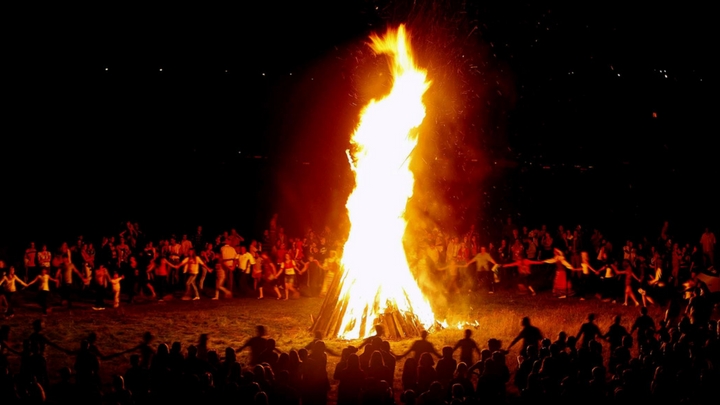
During the Samhain festival druid priests would light giant bonfires in order to “hold back” the onset of winter for as long as possible as well as for divination purposes. Huge feasts would be held near the fire, consisting of recently slaughtered livestock, who’s blood was sprinkled around the houses as an offering to the earth as well as to ward off unwanted spirits.
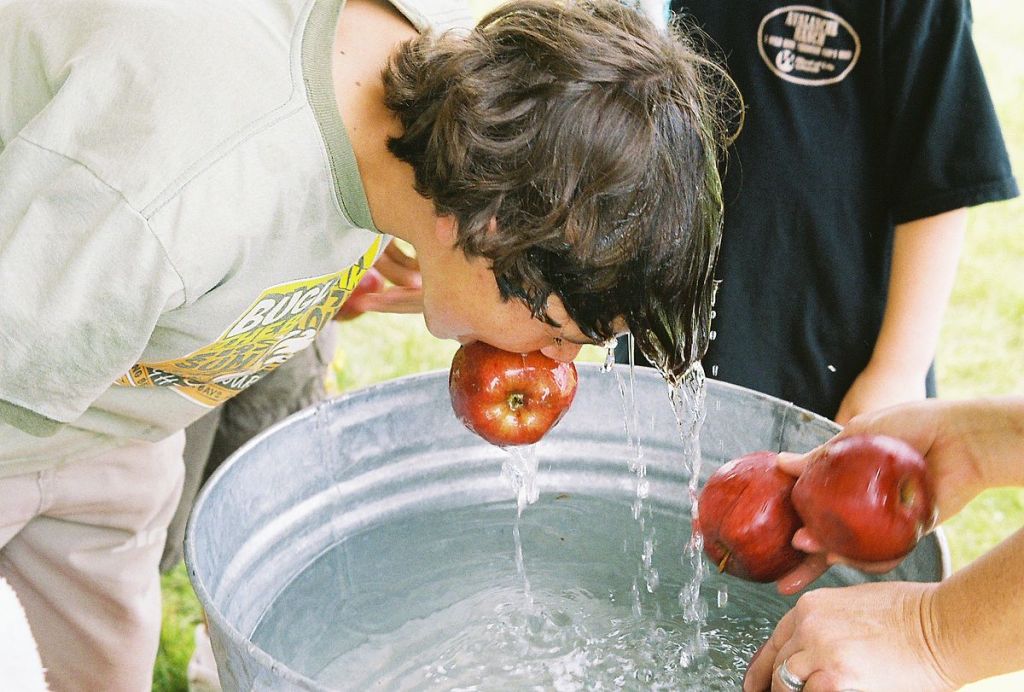
Apples and hazelnuts were used in divination rituals and games. Apples specifically were associated with the Otherworld and the immortal. This is where bobbing for apples comes from. The peels of apples were used to tell the future by throwing them over your shoulder. Whatever letter the peel resembled after throwing it was the first letter of the name of the person you were supposedly going to marry. Hazelnuts were used to tell the future as well. Two were placed in a pot over a fire, representing you and the person you liked. If they stayed together throughout the roasting process than it was seen as a good match, but if they popped away from each other then it just wasn’t meant to be.
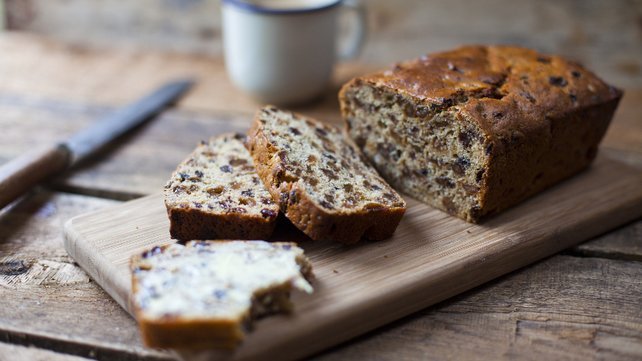
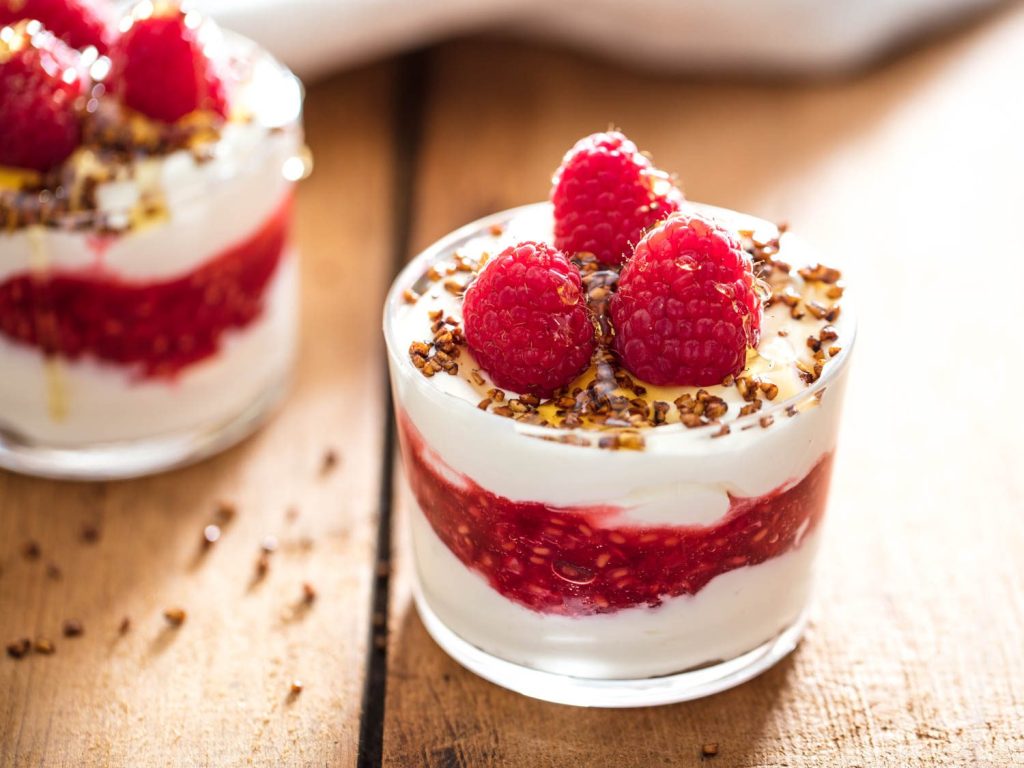
Another food tradition involved putting items into baked goods like a cake, barmbrack or cranachan. Pieces of these would be served randomly to people and whatever item you got was representative of what the next year held in store for you. For example if you found a coin in your piece then wealth awaited you the following year.
Food Traditions that Crossed Over into Halloween
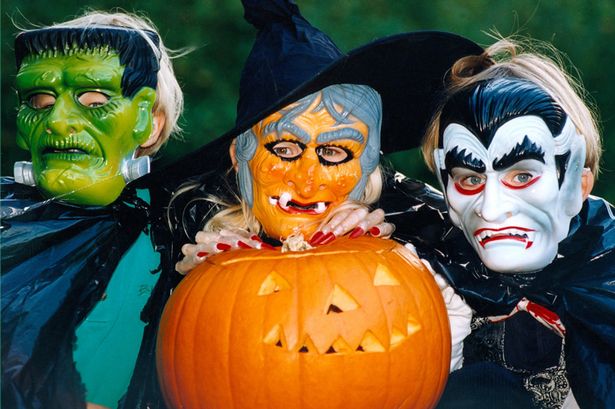
Most of the food traditions that I highlighted above aren’t practiced much anymore. However there are a few that have survived through Halloween. One of the things early Celts would do is send their children door to door to collect food for the massive Samhain feast. However, they needed a way to keep their children safe from the wandering spirits that roamed the earth during this time. To do this, they dressed their kids up in scary costumes meant to mimic the evil spirits in order to scare them off. In Scotland they took this a step further, in that if a household refused to give them food or welcome them into their home, they would cause mischief and pull pranks on those households. This is where the term “Trick-or-Treat” comes from and where the entire practice of going door to door dressed as a ghoul to collect food (candy) came from.
So how did this become what we all know as Halloween? Why did the Samhain traditions live on and become popularized while similar traditions in other cultures did not? The reason is two-fold: early Christianization of the Celtic people and mass immigration to the United States. The Celtic lands of Ireland and Scotland were largely Christianized from the 5th to 8th centuries. During this time, all pagan traditions and beliefs were either eradicated or incorporated into a Christian framework. Samhain was one of the traditions incorporated, but instead of Samhain, it was now called All Souls Day (Nov 1) and All Saints Day (Nov 2). Because of this incorporation, many of the traditions of Samhain carried over to Halloween and is a deeply rooted tradition because of it. On top of that, many of the first colonizers of America came from a Celtic background. These settlers brought with them their traditions from home and influenced other settlers with those traditions. Since there really weren’t any competing holidays during this time from other colonists, Halloween was adopted by the masses and continues to be celebrated to this day. The main reason why Día de los Muertos isn’t as popular as Halloween in the United States despite its closer proximity spatially is unfortunately because Halloween was the holiday of the colonizers and Día de los Muertos was the holiday of the colonized. And while Día de los Muertos is gaining popularity, Halloween is still the dominant holiday in the United States.
Nonetheless, this is my absolute favorite time of year. From the weather getting colder to the days getting shorter, there is a sense of urgency to get ready for winter during this time. How cold will it get this year? How much food should I stockpile incase of a blizzard? Will I need to bring out my winter jacket next week? If you ask me there is also an inherent sense of the supernatural during this time as well. Seeing the leaves on the trees fade from green to orange to red to brown, seemingly dying right before your eyes. The cold air muting noises as you walk home alone at night, as you wonder if that was a ghost you saw float between the trees or just your imagination. Curling up in your bed as you ponder the thought, all the while feeling like you’re being watched from across the room….

Happy Halloween!
1. Frazer, James George (1922). The Golden Bough: A Study in Magic and Religion.
2. MacLeod, Sharon. Celtic Myth and Religion. McFarland, 2011.
3. Leeming, David (8 May 2003). From Olympus to Camelot: The World of European Mythology
 The Cultural Chef
Such an amazing blog. Please give my blog a read too. I am a travel blogger from India.
LikeLike