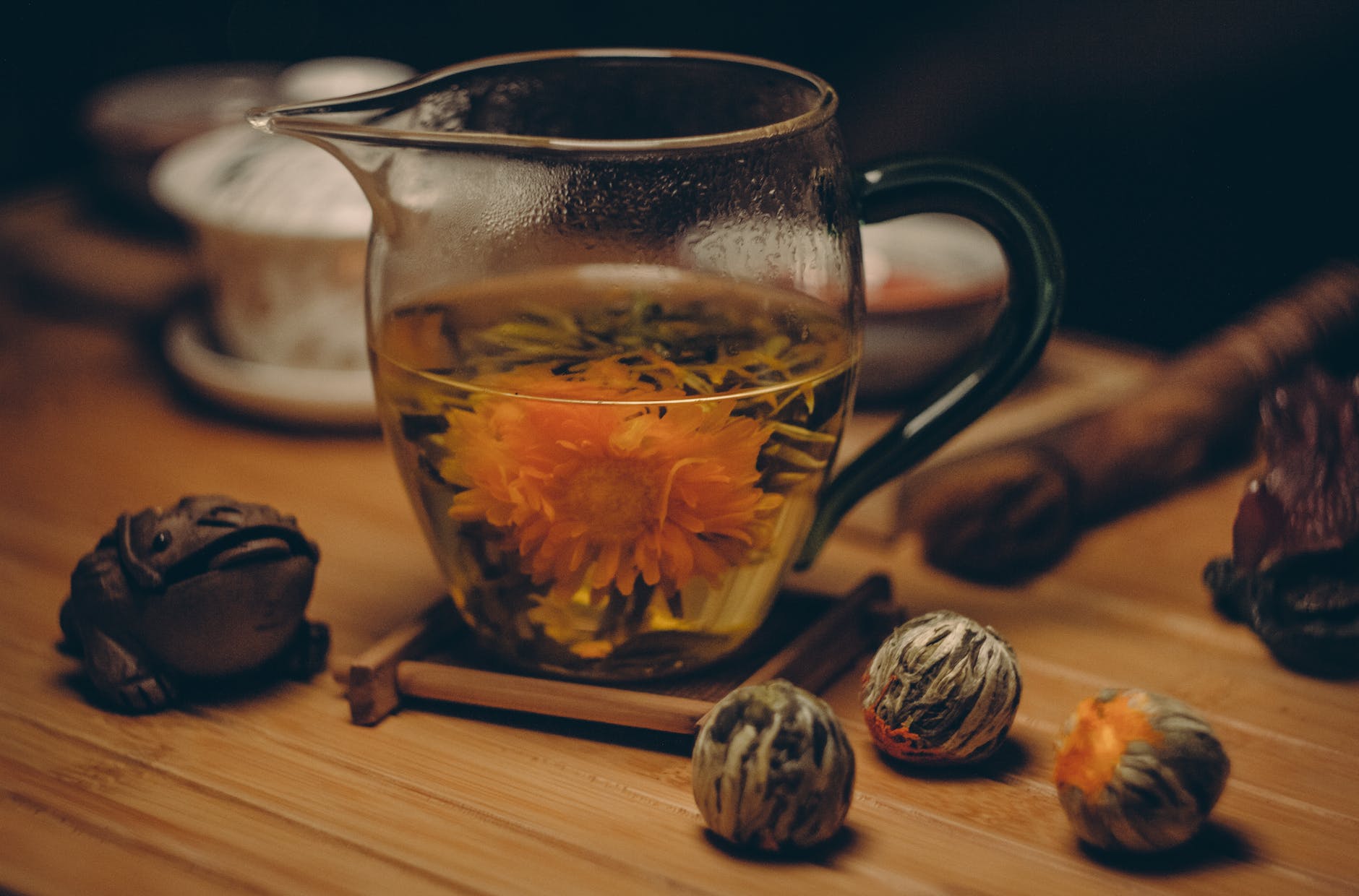
How many of you have had tea? If I had to guess, I would say that all of you have at least tried tea of some sort. Tea is the most consumed beverage in the world after water and is one of the oldest beverages in the world, having been consumed for thousands of years. There are numerous varieties of tea and just as many preparations. You could write an entire book about the different varieties and preparations of teas from different cultures. This post will look at tea more generally and discuss how tea has been used medicinally and look at the health benefits that come from drinking tea.
Tea plants are native to East Asia, and consequently China has one of the oldest tea drinking cultures in the world. It is thought that tea was first used for medicinal purposes in China. In Chinese mythology, the discovery of tea is accredited to Shen Nong, a mythological Chinese ruler who is known as the father of medicine and agriculture. It is said that he went out and tried a huge variety of plants to see if they were fit to be food or medicine. One legend describes him trying a host of poisonous plants and becoming very ill. While he was laying on the ground in pain, a few leaves fell near him. He brewed them in hot water and drank the liquid and it healed him. These healing leaves happened to be tea leaves. Because of this, tea was seen as an antidote to poisons and just a general aid to remove toxins from the body.
Scientific studies today have shown that Shen Nong may have been on to something. The main chemicals found in tea are caffeine and polyphenols. The potential health benefits of tea come from the high polyphenol content. Polyphenols act as antioxidants in our bodies which help control free radicals in the body. Free radicals can mutate our DNA, causing it to produce more LDL cholesterol and effect our cell walls in negative ways. These are both very bad for our health, so being able to reduce the impact of free radicals in the body is very important. Other studies have claimed that tea can help reduce the chance of stroke, heart disease, and cancer. However, these studies are inconclusive, and more research is needed to verify these claims.
Tea is yet another example of modern medicine verifying the validity of folk medicine. It never ceases to amaze me that humans have known for centuries the health and medicinal benefits of different substances without knowing why they are beneficial from a scientific standpoint. It is a reminder to me and should be a reminder to the scientific community not to dismiss the claims of folk medicine simply because there hasn’t been research done into the validity of its claims. Rather, we should explore the claims more in depth. A counter-question I would like to pose is this: if something makes you feel better, or helps to relieve an illness or injury, does it matter if there are scientific claims to back it up?
References:
- “Tea.” The Nutrition Source, 27 Jan. 2022, https://www.hsph.harvard.edu/nutritionsource/food-features/tea/.
- Yee, L.K., Tea’s Wonderful History, The Chinese Historical and Cultural Project, archived from the original on 3 August 2002, retrieved 17 June 2013,
year 1996–2012
- Yamamoto, T; Kim, M; Juneja, L R (1997). Chemistry and Applications of Green Tea. CRC Press. p. 4.
 The Cultural Chef