These blog posts are not meant to be used to identify plants to eat, they are meant for educational purposes to learn about different wild foods used by people who are able to identify them. If you are interested in learning how to forage your own wild foods, you need to learn as much as you can about plant identification as possible. Samuel Thayer’s book “Sam Thayer’s Field Guide to Edible Wild Plants of Eastern & Central North America” is a great resource in learning how to identify edible plants if you are foraging in the United States. But I cannot stress enough, do not eat anything unless you are absolutely sure what it is.
Spruce trees are very abundant across the northern states. White, red and black spruce trees are all native, but the Norway Spruce is not. All are safe to consume. One potential toxic lookalike is the common yew, however differentiating between the species is fairly easy as the yew is a bush and has flat needles while the spruce is a tree with rounded needles. Other ways to identify a spruce tree are by looking at the bark, which should look gray and thin and covered in small scales. The needles are short, stiff and sharp. Cones can range from egg-shaped to cylindrical.
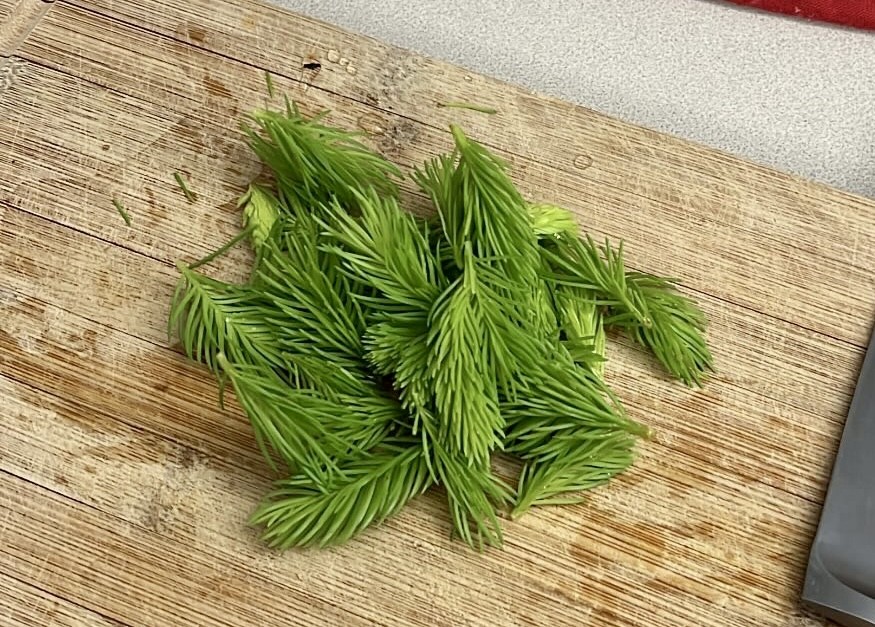
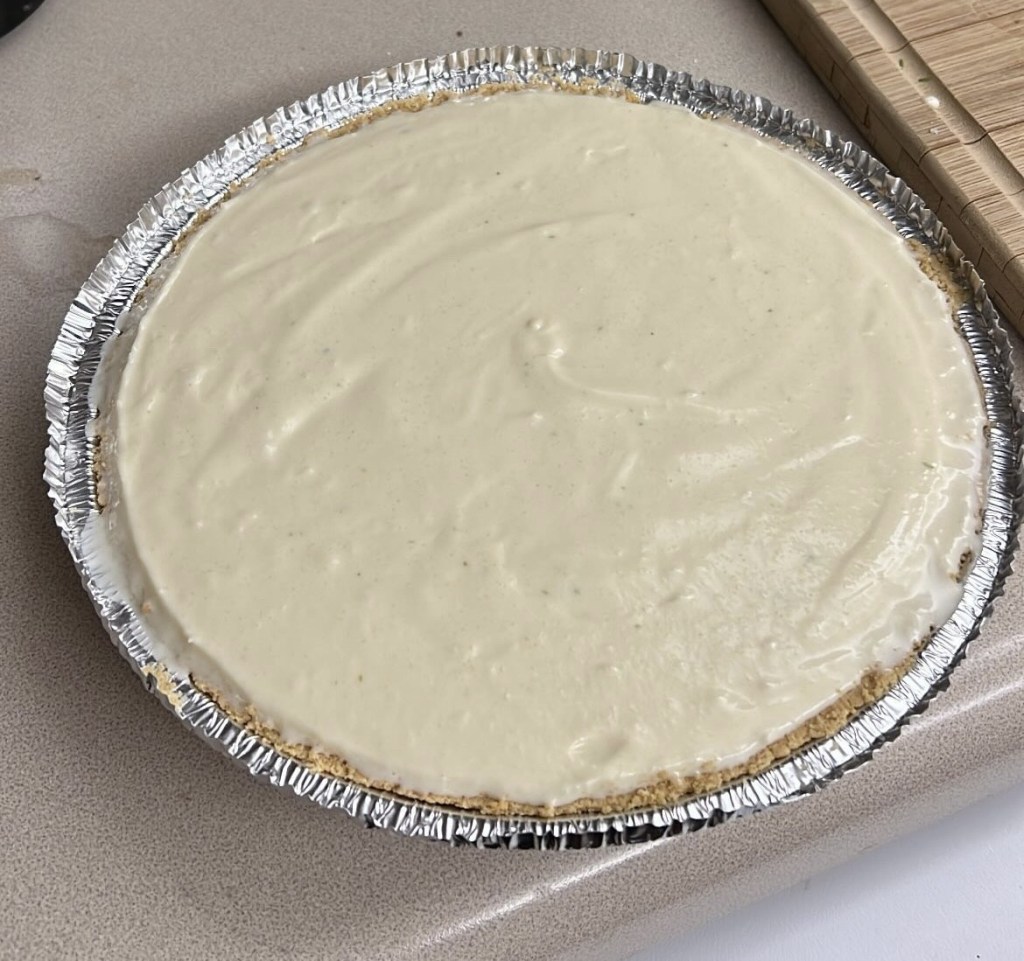
Common parts of the tree used for food are the inner bark and spruce tips, which are the tender, new growth on the tips of branches. Spruce tips can be used for many different purposes. You can eat them raw in salads or blended to flavor smoothies or purees. You can use spruce tips or pinecones to make pine syrup or mugolio. My favorite use so far has been making a spruce tip key lime pie from a recipe I found from Alan Bergo from the Forager Chef. The flavor of spruce tips is very piney and citric. I would use it to replace or enhance citrus fruits, this is why I enjoy the spruce tip key lime pie so much. It is also an amazing source of vitamin C. You want to make sure you harvest spruce tips when they are young and soft, otherwise the flavor gets too bitter, and the needles will be too sharp to bite. The perfect time to forage for these is in the spring to the early summertime. Spruce products have seen a rise in popularity recently amongst high-end restaurants. The unique piney, citrus flavor adds a flavor you can’t find in other ingredients which makes it prized by chefs. Some restaurants even carry a liquor called Zirbenschnaps which is made by fermenting pinecones.
Since spruce trees are found all across the boreal forests in the northern hemisphere, they have been an important resource for northern cultures around the world. Finnish people made syrups and used the buds to make spices. Northern Native American peoples used the flexible roots to weave baskets. Spruce trees are also the species that people use as Christmas trees, which is a tradition that stems from Germanic peoples in Central Europe. The cultural significance of this tree in modern times cannot be understated. Whether in its use in fine dining restaurants to its utilization by millions of people to decorate their homes during Christmas time, this species of tree is held dear to many people to this day.
Spruce trees are one of those plants that remain very significant in modern times. Knowledge of plants and their uses seems to be dying out amongst common people in the United States. But I think that spruce trees are one of those plants that a vast majority of untrained people would be able to recognize pretty easily because of how culturally significant it is. Its use as the Christmas tree is immediately recognizable to most people, and its rise in the fine dining scene will only make it more popular. Products made from the different parts of the spruce tree are delicious and palatable to most people. It is also a sustainable food source because the parts used don’t require killing the entire tree. Plants like this excite me about the future of our food system because if we are going to continue to feed the world in a healthy, sustainable way, we are going to have to diversify what we eat and think outside of the box.
- https://foragerchef.com/spruce-tips/
- Perry, Joe (27 September 2010). Christmas in Germany: A Cultural History. University of North Carolina Press. p. 32
- Jyske T, Järvenpää E, Kunnas S, Sarjala T, Raitanen JE, Mäki M, Pastell H, Korpinen R, Kaseva J, Tupasela T (2020). “Sprouts and Needles of Norway Spruce (Picea abies (L.) Karst.) as Nordic Specialty-Consumer Acceptance, Stability of Nutrients, and Bioactivities during Storage”
- Thayer, S. (2023). Sam Thayer’s Field Guide to Edible Wild Plants of Eastern and Central North America.
- https://foragerchef.com/spruce-tip-key-lime-pie/
 The Cultural Chef