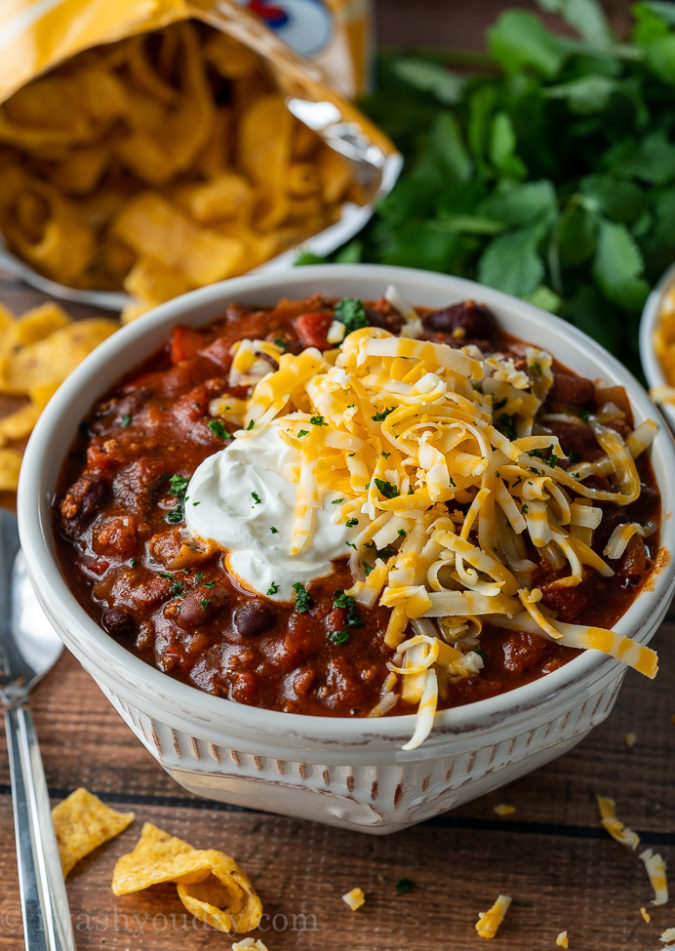
Chili is one of my favorite comfort foods. It conjures up memories of cold winter nights, where the only remedy was a hot bowl of chili to warm us up. The chili my mom made for us wasn’t too spicy, mostly comprising of cumin and other more mild spices. However the chili recipe I came up with is a lot spicier and tastes very different from my moms. What I find so great about chili, is that no two taste alike. There can be a great variety even in just one household. In this piece, I will focus on one specific region where chili is prominent and where it is thought to have originated, Southern Texas.
In the northern part of Mexico and what is now the southern part of Texas, chili was started as a dish primarily for working class Mexican women. It was then popularized in the United States, first in Texas, then spreading across the country. Chili is the state dish of Texas as well. The actual word ‘chili’ comes from the Nahuatl (Aztec) word for a specific pepper that we know as the chili pepper. This gives us a hint as to what is in this dish. Chili usually consists of dried chili peppers, ground meat (usually beef), beans and tomatoes. All of these ingredients are put in a pot and stewed for about an hour. Sometimes it is served over a bed of rice or noodles, but it can also be eaten as is. There is some dispute on ingredients amongst Texans, namely the beans and tomatoes, and if they should be included or not. For the most part, however, most chili I have eaten has had both included.
One thing I really appreciate about chili, and its history in particular, is that it has native roots. There aren’t many dishes popular in the United States today that you can point to and say “that is an indigenous dish.” I think that makes chili very special and unique among other dishes. It is also why I think beans and tomatoes were used in the dish traditionally since both of those are native plant species to the Americas. I also don’t think it would be too far of a stretch to imagine that turkey was used in place of the ground beef, as turkey is native to this continent and bovine is not. This is what makes chili great, there can be endless variations of it based on location, ethnic background and other factors. Chili can be personalized to each particular cook. Although I think a lot of Texans would disagree with me on that statement. But how else could you explain the many different varieties in the United States? From Cincinnati Chili to Green Bay Chili, the possibilities are endless.
Sources:
1. https://whatscookingamerica.net/History/Chili/ChiliHistory.htm
2. https://www.eater.com/2018/3/7/17081968/best-food-texas-tex-mex-barbecue
 The Cultural Chef
This does look tasty.
LikeLike