Regional Foods: Clam Chowder

One of the first dishes I think of when I think of East Coast cuisine is clam chowder. Being from the Midwest, the only kinds I know are New England clam chowder and Manhattan clam chowder. But after researching the topic, I found that there are many more varieties of it that I hadn’t heard of. Each variety is unique and can typically be traced back to the immigrants who settled in each region. In this post I will dive into each variety and try to trace the cultural history of each kind.

Before I look into each specific variety, I think it is important to distinguish between the different types of clam chowder. There are three types that correlate to the base broth of each soup; cream, tomato, and clear. Here lies a hint for the cultural origins of the types, which I will get into later on. Also I think it is important to define what makes a soup a chowder. Chowder, by definition is a “soup or stew made with seafood”, according to the Merriam-Webster Dictionary.

Cream-Based Types

New England Clam Chowder
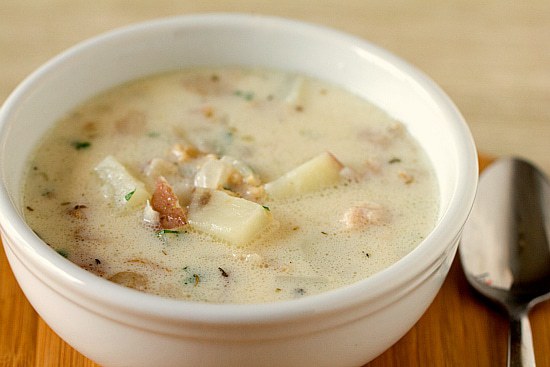
From https://www.browneyedbaker.com/new-england-clam-chowder-recipe/

New England clam chowder is thought to be the first clam chowder, most likely with a French origin, as cream-based soups usually are. The main ingredients in this soup are potatoes, onions and of course clams, and it is often garnished with oyster crackers. This is also probably the most popular kind of clam chowder and most common outside of the East Coast. In the Midwest, this is what we think of as “clam chowder”.

Delaware Clam Chowder
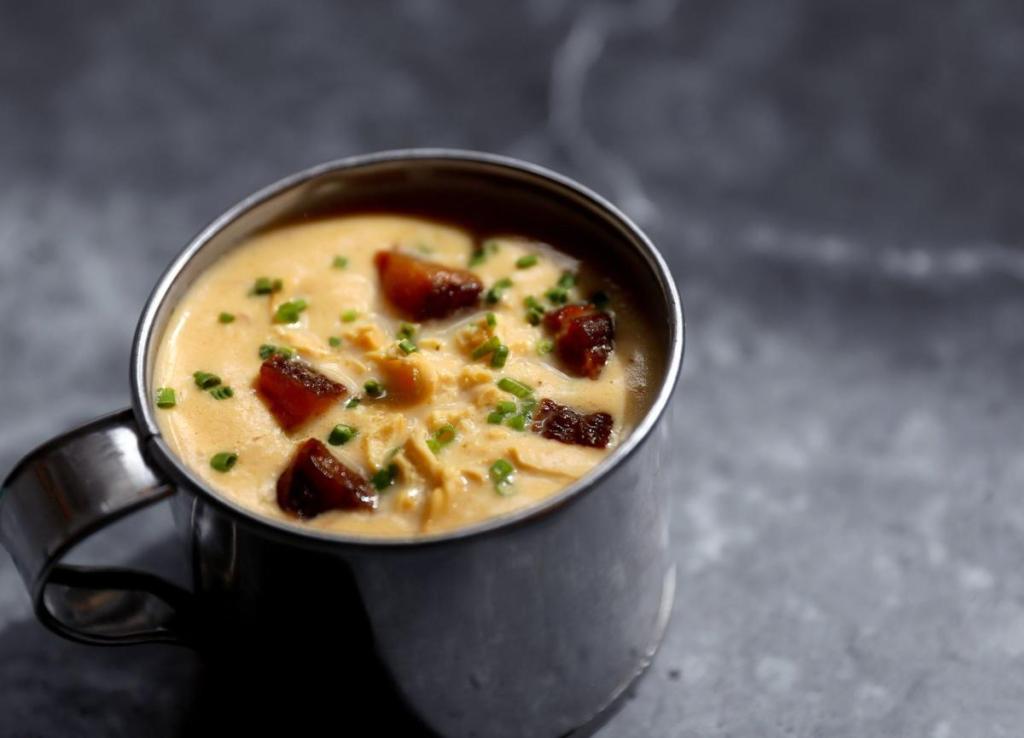
From https://www.stltoday.com/lifestyles/food-and-cooking/recipes/peacemaker-clam-chowder/article_068024c0-3ed2-5986-803d-de787c327e20.html

Delaware clam chowder is thought to be a derivative of New England clam chowder. Along with the potatoes, onions and clams, this variety adds salt pork or bacon. Based off what I’ve seen, this kind of clam chowder gets lumped in with New England clam chowder and I have seen many restaurants serve Delaware style clam chowder as “New England” clam chowder.

Tomato-Based Types

Manhattan/ Rhode Island Clam Chowder
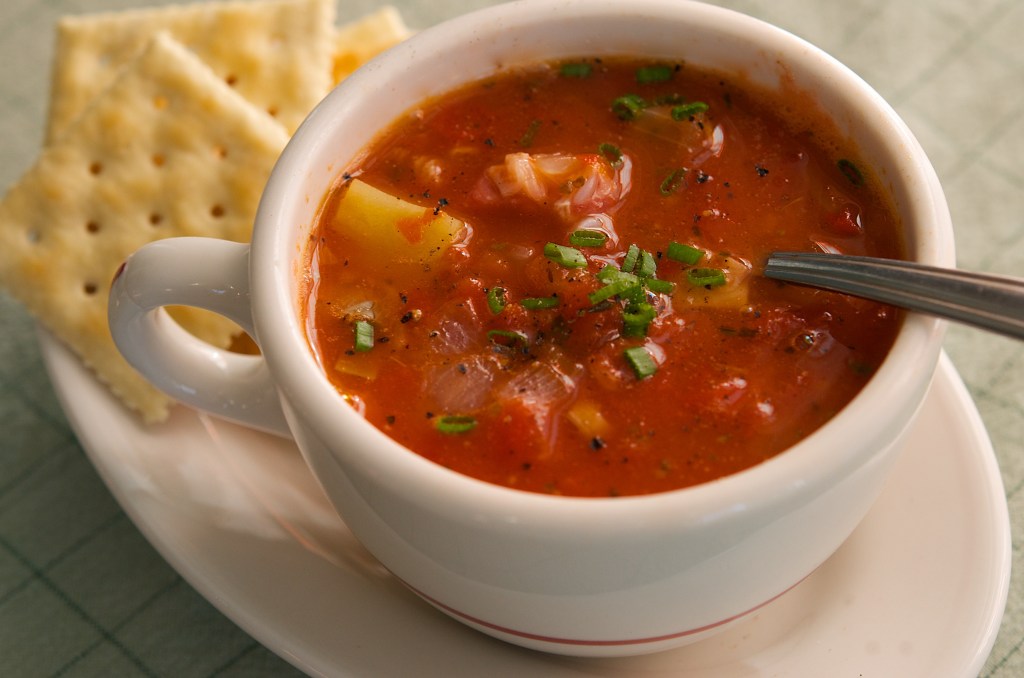
From https://www.chowhound.com/food-news/159319/your-ultimate-guide-to-east-coast-clam-chowders/

Manhattan clam chowder is probably the second most popular type of clam chowder, as it is the only other one I see on menus in the Midwest. This variety replaces the cream with a tomato base and has origins in Portuguese cuisine, as this dish is traced to Portuguese immigrants on the East Coast. It also includes more vegetables like peppers, celery and carrots. Rhode Island clam chowder is very similar, also with Portuguese origins, but this type omits the added vegetables and instead just has potatoes.

Minorcan Clam Chowder
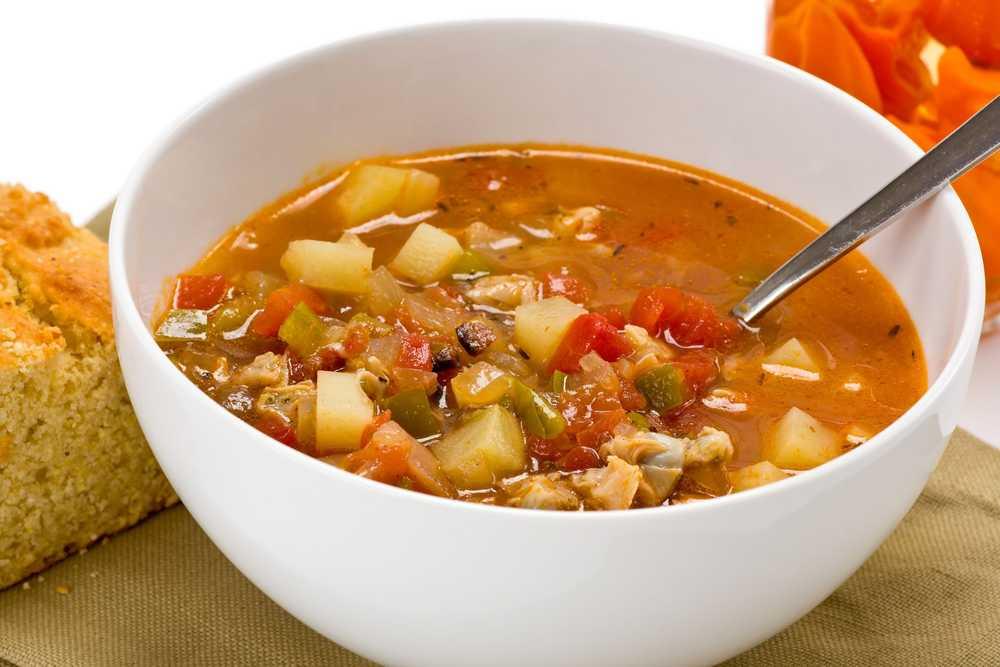
From https://www.staugustine.com/living/food/2014-10-01/recipe-mary-ellen-masters-minorcan-clam-chowder

Going into St. Augustine, Florida now, we get Minorcan clam chowder. While having very similar ingredients to Manhattan clam chowder, this variety adds a kick of spice by adding the datil pepper. This pepper is only grown in only a few places, two of them being Menorca, Spain and St. Augustine, Florida. This soup has Spanish origins due to the large population of Spanish immigrants in St. Augustine.

Clear-Broth Types

Hatteras Clam Chowder

From https://www.homeandplate.com/blog/2015-2-hatteras-clam-chowder/

Hatteras clam chowder comes from North Carolina’s Outer Banks region. This style is characterized by the use of clear broth, bacon, potatoes and onion, and flour for thickening. This variety is most likely a derivative of New England clam chowder, the ommision of the milk was due to the fact that these islands never really had milk readily available.

Clam chowder on the East Coast, for all varieties, I found started off from humble beginnings. Often as a cheap way for an immigrant family to make sure everyone was fed. It has since grown to be an iconic symbol for the area. One particular theme that I think clam chowder encapsulates very well is cultural mixing. We have immigrant families from France, Portugal and Spain all taking traditional ingredients from their homelands (tomatoes, peppers, cream), using local ingredients from their new home (clams), and creating something completely new and unique. This is how I would describe United States cuisine as a whole. Being made up of immigrants, we took culinary traditions from where we came from and molded them with new ingredients found in North America. For the most part, I think dishes like this are what define the culinary regions that we have in the United States.

1. https://www.eater.com/2016/1/31/10810568/clam-chowder-manhattan-hatteras-new-england-rhode-island-minorcan-new-jersey

2. https://blog.carolinadesigns.com/outer-banks-food/hatteras-island-style-clam-chowder/

3. https://magazine.northeast.aaa.com/daily/life/food-dining/types-of-clam-chowder/
Meaningful Foods: Kava Root

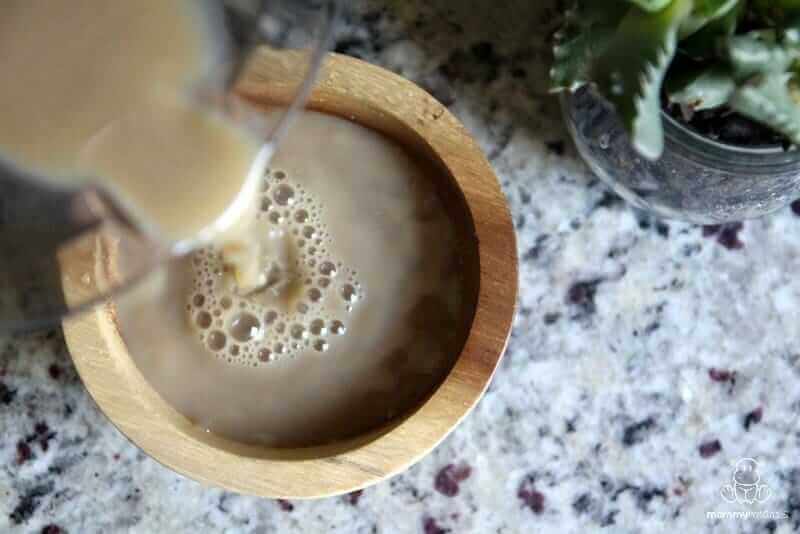
From https://mommypotamus.com/kava-kava/

How do you relax after a long day? Do you come home, kick back, crack open a beer and watch your favorite reality TV show? Do you cook with your family and socialize around the dinner table? We all have our own rituals that we perform when we are looking to relax. This week in my series of Meaningful Foods, I look at the Kava plant and its role in the ritual of relaxation and socialization in Polynesian culture.

Kava is a plant that is native to various islands in Polynesia, most commonly in Vanuatu, Samoa and Hawaii. Traditionally in these cultures, one would ground up the root of the kava plant and make a drink out of it. This drink would be consumed at night by a group of people in order to relax and spend time with friends and family. It would also be consumed as part of a ceremony, or any time that large crowds of people are gathered in the community. For a long time, use of the kava plant was kept to these regions. However in the past few years, there has been a new popularity of the plant in western society. There are now “kava bars” where you can go and get different types of teas and smoothies infused with the kava root. There are kava teas that you can buy in grocery stores so you can make the drink at home. It is all marketed as being a new health food and a nootropic that relaxes you and makes you feel good.

Kava does have chemicals in it that effects a persons mood. This is basically the opposite of coffee in that, where coffee stimulates your brain, kava relaxes it. Along with that relaxation kava has been shown to reduce anxiety and increase ones mood. Also, unlike the caffeine in coffee, the kavalactones in the kava root are non-addictive. Recently, scientists are interested in the effects that these chemicals found in the kava plant have on treating insomnia, chronic pain and depression. There was even an NFL player, Matthew Masifilo that used kava instead of Vicodin to suppress pain from a surgery. He knew about the plant and its benefits because he is Polynesian himself.

The taste of this drink is something that takes some getting used to. By itself it is very earthy tasting, some might even say that it tastes like dirt. This is why, in western culture, it is mixed with other things to mask that flavor. A kava tea bag that I recently had tasted like chamomile, lemongrass and oatmeal. Many of the kava bars make smoothies from kava and mix it with different fruits to help mask the flavor. I think it is important to note, however, that this is not how it is traditionally consumed. In Polynesian culture, the root is ground up and steeped in water. This way, it maintains its earthy flavor.

The kava plant is extremely important to the different cultures of Polynesia, and is one of the key factors of relating all of those cultures to one another. Along with the social aspect kava has, it also carries a religious significance to the cultures of Polynesia. It is often a big part of religious ceremonies. During negotiations between tribes, kava would be offered to both parties in order to calm nerves and to negotiate with a level head so conflicts do not arise. Personally, I think that the commercialization of the kava root cheapens it, making it just another trend in the health foods scene. However the medicinal benefits of it are undeniable. Drinking kava as a social activity as well seems like it would be beneficial, as I am always a supporter of anything that brings people together. Kava could help bridge the gap between western and Polynesian cultures, bringing both together in this social interaction.

1. Showman, Angelique F.; Baker, Jonathan D.; Linares, Christina; Naeole, Chrystie K.; Borris, Robert; Johnston, Edward; Konanui, Jerry; Turner, Helen (2015-01-01). “Contemporary Pacific and Western perspectives on `awa (Piper methysticum) toxicology”. Fitoterapia.

2. https://mommypotamus.com/kava-kava/

3. . Ernst, E. “A Re-Evaluation of Kava (Piper Methysticum).” British Journal of Clinical Pharmacology, Blackwell Publishing Ltd, Oct. 2007, http://www.ncbi.nlm.nih.gov/pmc/articles/PMC2048557/.

How COVID-19 has Affected the Chicago Restaurant Industry

From https://www.oneidadispatch.com/multimedia/chicago-s-bean-sculpture-closed-amid-quarantine/video_e5bd0e6d-0d33-5e04-a64d-da34ab1fb710.html

I wasn’t sure whether or not I wanted to address the pandemic happening right now, as it seems like this is all we ever hear about in the news or online now. But seeing as I currently work in the restaurant industry in one of the states with the highest amount of cases in the nation, I figured I would give my perspective on how this virus has affected the restaurant industry. I will just be giving my observations of my personal experience and will try to avoid making any overarching statements about the situation as a whole, as I am no expert on the matter.

The restaurant industry in Chicago has taken a huge hit from this pandemic. They were amongst the first businesses to close down or reduce person-to-person contact by becoming carry-out/delivery only. I am lucky enough to work at a restaurant that is doing carry-out/delivery only, and therefore am still able to work through this. Many people I know haven’t been so lucky. Many are unemployed, as the restaurant they worked at have made drastic cuts to personnel in order to remain viable. This has caused many chefs in the Chicago scene, like Rick Bayless, to plead with the governor to help restaurant workers through this. However no relief is in sight as of right now. The stimulus package from the national government is all that these workers have to look forward to for help. Meanwhile, it is coming up on nearly two weeks without work for some restaurant workers and rent is coming up in a few days. And with pay as low as it is in the industry, the reserve money for a lot of people just isn’t as much as it needs to be to cover an event like this. My hope is that this won’t discourage people from working in restaurants, and I hope that this is the wake up call the industry needs to pay its workers what they deserve. Otherwise I fear that many restaurants won’t have cooks to make the food and will ultimately have to shut down even after this pandemic has passed.

On the other hand, for some restaurants it’s business as usual (kind of). The restaurant I work at is one of the only ones on the block to remain open, other than some chain restaurants. Even though we are only allowed to do carry-out and delivery orders, we are just as busy as we were before this all happened, sometimes even busier. Now, our issue isn’t that we have too many people working, its that sometimes we don’t have enough. A few of my coworkers are college students who, after dorms closed, had to go back home. Now, we are understaffed during some parts of the day, so it might be beneficial to hire maybe one or two other cooks to help out during those times. The only reason why we are able to do so well is because food service businesses are considered “essential” and therefore are allowed to stay open, even through a shut down order.

This can also be considered from a different angle. I framed being able to work through the shut down as a good thing, however it also can be seen as dangerous to us as workers. On a daily basis we are exposed to a lot more people than the average person quarantined in their home is, and therefore are more likely to contract and/or spread the virus to those we come into contact with. We have been taking many more precautions during this time in order to reduce the chances of infection, so the chances that we give it to someone are extremely low. But the chances that we get it are higher. This makes me question which is more important: money or my personal health. And in a lot of ways the two are synonymous, in order to be healthy you need money and vice versa. Personally, I am still young and have no underlying conditions, so I am confident that I will be ok and I am taking the necessary precautions in order to not spread the virus if I am a carrier. However another coworker of mine is asthmatic, so getting the disease for them could be extremely problematic.

As I am writing this the total amount of COVID cases in the United States is at nearly 105,000 people, and that number is rising every day. Things will only get worse before they get better, and I hope they get better soon. One thing that I hope happens after this all subsides is that the restaurant industry comes out better than it was going into it. Offering farer wages, and putting in place measures to make sure that they’ll be able to cope if anything like this happens again would be a great start. The main thing that people at home can do to help is to order from local restaurants that are still open. There’s a good chance that if you’re reading this, you like food and restaurants. Order from your favorite spot so that when the dust clears, they’re still there. Not only will you be helping ensure your favorite restaurant stays open, but you will also be ensuring that the people who work there can continue to do so.

Regional Foods: Texas Chili

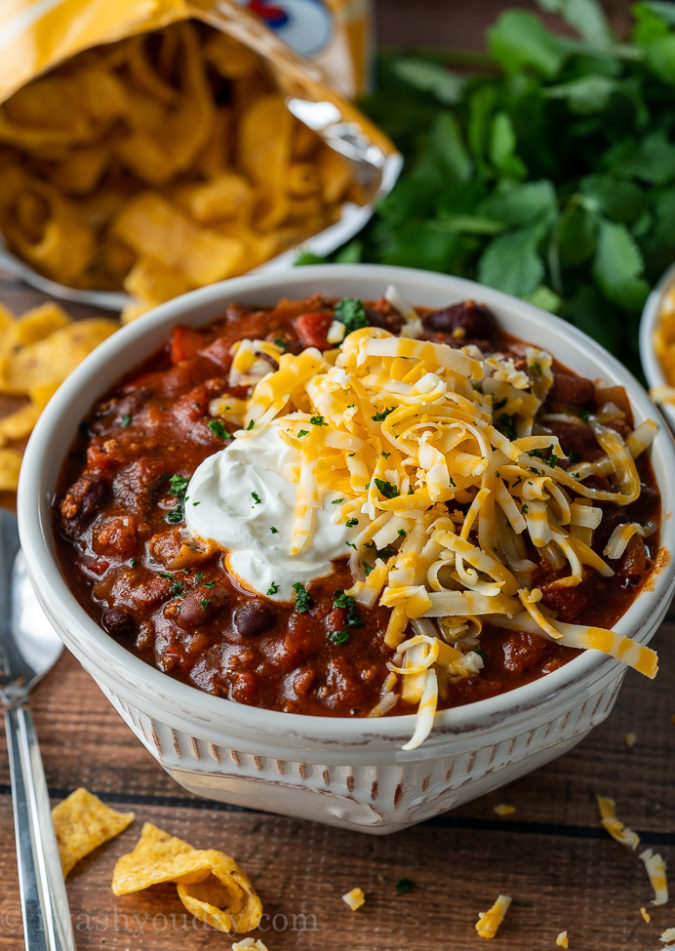
From https://iwashyoudry.com/thick-and-hearty-chili/

Chili is one of my favorite comfort foods. It conjures up memories of cold winter nights, where the only remedy was a hot bowl of chili to warm us up. The chili my mom made for us wasn’t too spicy, mostly comprising of cumin and other more mild spices. However the chili recipe I came up with is a lot spicier and tastes very different from my moms. What I find so great about chili, is that no two taste alike. There can be a great variety even in just one household. In this piece, I will focus on one specific region where chili is prominent and where it is thought to have originated, Southern Texas.

In the northern part of Mexico and what is now the southern part of Texas, chili was started as a dish primarily for working class Mexican women. It was then popularized in the United States, first in Texas, then spreading across the country. Chili is the state dish of Texas as well. The actual word ‘chili’ comes from the Nahuatl (Aztec) word for a specific pepper that we know as the chili pepper. This gives us a hint as to what is in this dish. Chili usually consists of dried chili peppers, ground meat (usually beef), beans and tomatoes. All of these ingredients are put in a pot and stewed for about an hour. Sometimes it is served over a bed of rice or noodles, but it can also be eaten as is. There is some dispute on ingredients amongst Texans, namely the beans and tomatoes, and if they should be included or not. For the most part, however, most chili I have eaten has had both included.

One thing I really appreciate about chili, and its history in particular, is that it has native roots. There aren’t many dishes popular in the United States today that you can point to and say “that is an indigenous dish.” I think that makes chili very special and unique among other dishes. It is also why I think beans and tomatoes were used in the dish traditionally since both of those are native plant species to the Americas. I also don’t think it would be too far of a stretch to imagine that turkey was used in place of the ground beef, as turkey is native to this continent and bovine is not. This is what makes chili great, there can be endless variations of it based on location, ethnic background and other factors. Chili can be personalized to each particular cook. Although I think a lot of Texans would disagree with me on that statement. But how else could you explain the many different varieties in the United States? From Cincinnati Chili to Green Bay Chili, the possibilities are endless.   

Sources:

1. https://whatscookingamerica.net/History/Chili/ChiliHistory.htm

2. https://www.eater.com/2018/3/7/17081968/best-food-texas-tex-mex-barbecue

Meaningful Foods: Ghee

When I was first starting out in culinary school, one of the first things we were taught was how to make clarified butter. While the process was being explained to us, one of the other students spoke up, saying “Oh! This is kind of like ghee!” With my very limited knowledge of food at the time, I had absolutely no clue what they were talking about so I looked up what ghee was. After some research I found that, while the cooking techniques were the same, ghee and clarified butter are very different religiously, culturally and symbolically.

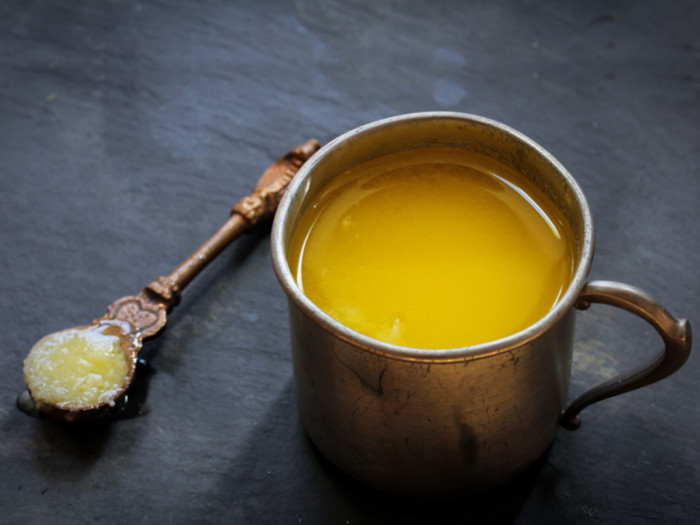
From https://www.organicfacts.net/health-benefits/other/ghee-clarified-butter.html

The cooking process for both ghee and clarified butter are basically the same. You first take whole butter and melt it in a pot. You continue to cook it until the water in the butter settles to the bottom of the mixture or evaporates completely and the solids float to the top. You then skim the solids off, pour the fat into a container and discard the remaining water at the bottom. What you are left with is pure fat that looks clear with a yellow tint, almost honey-like. The only difference in production is that in ghee, this is then simmered, which gives it a nutty flavor. (1) In the culinary world, clarified butter is used to sauté as well as in emulsions like hollandaise sauce. This is where the similarities of clarified butter and ghee end. While clarified butter is just prized for its practical uses in western cooking, ghee is prized for many other reasons in Hindu and Indian cooking.

Ghee is always made from cows milk, as cows are sacred in Hinduism. It is a requirement to have ghee for the Vedic rituals yajna and homa. (2) These rituals involve making offerings in front of a fire and are often done during marriages and funerals. Hindus also use ghee in order to worship divine deities such as Krishna and Shiva. Because of this religious aspect of ghee, the purer it is the better, as only the purest ghee are offered to the gods. (2)

Ghee is also popularly used in Indian cuisine and is often the star ingredient in many dishes. Biryani is one that many westerners might be familiar with and includes ghee in its preparation. Other dishes made with ghee include puranpoli, khichdi and kahdi. Ghee is also used to top naan and other types of bread, similar to how western culture uses butter to do so. (3)

I think that this is a great example of how very similar dishes or ingredients can have very different meanings between cultures. In American and European culture, clarified butter is used to cook with because it is a pure fat and is harder to burn when sautéing. It is also used as a dip when you eat lobster or crab at restaurants. And while it tastes really good and has many important uses, that’s as important as clarified butter gets. However, in Indian culture, not only is ghee used in many important dishes, to Hindus, ghee takes on a religious and symbolic role as well. It is offered to the gods of the Hindu religion as a symbol of the peoples devotion to them and is given as an offering at huge life events. So while there are some things in common between ghee and clarified butter, it is really hard to compare the two on a cultural and symbolic level.

1. https://www.nytimes.com/2003/12/17/dining/food-chain.html

2. Language and Style of the Vedic Rsis, Tatyana Jakovlevna Elizarenkova (C) 1995, p. 18.

3. Sahni, Julie (1998). Julie Sahni’s Introduction to Indian Cooking, p. 217 under “usli ghee.” Berkeley: Ten Speed Press.

Regional Foods: Fish Boil

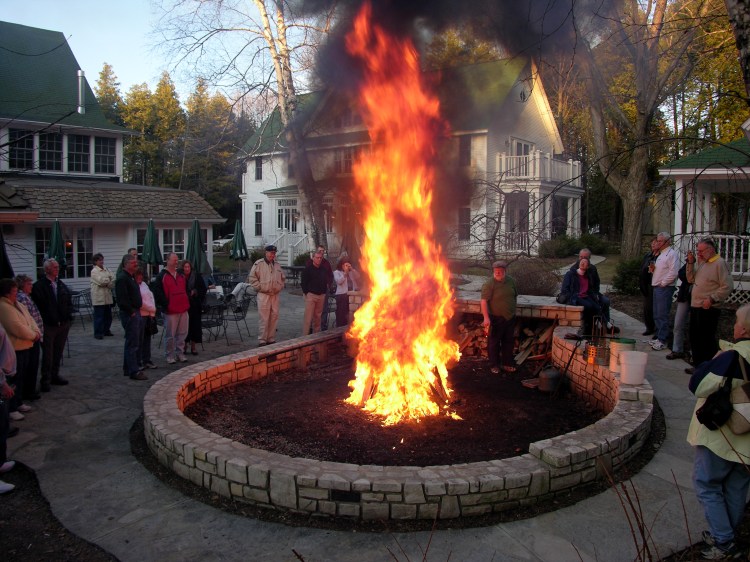
From https://www.milesgeek.com/door-county-wisconsin

What do you think of when someone wants “American” food? Some of the first things that come to mind are hotdogs and hamburgers. In fact, most people don’t associate America with really having a food culture, at least not in the same way that France or Italy does. Most people, both in and outside the US associate the United States with fast food. In this series I will explore regional foods within the United States in order to bring to light a deeper food culture and one that Americans can be proud of. In this post I will focus on fish boils in Wisconsin.

From https://raspberrylimericki.wordpress.com/2013/06/18/my-trip-to-door-county-or-a-dissertation-on-the-cherry/

Fish boils are one of my favorite cooking spectacles. My family goes to Door County, Wisconsin every summer for vacation and we always plan to go to a fish boil while we are there. Door County is a cluster of little towns on the peninsula that juts out into Lake Michigan from Wisconsin. This makes it the perfect place to have fish boils. A fish boil is a very specific cooking procedure in which a giant tub of water is placed over a wood fire outside. The chef then adds salt and vegetables, usually potatoes and onions, to the water and cooks them until they are tender. Then, they add the fish, traditionally Whitefish. The pot is then covered and cooked for a few minutes. After the fish oils have risen to the top of the water, the chef throws a tiny bit of kerosene into the fire and the flames leap up into the air, engulfing the pot. It is then served, family-style until there is nothing left.

This tradition is traced back to the Scandinavians who settled in the area. The story goes that many of these Scandinavian settlers became either loggers or fishermen in the area. At the end of the day, when both the loggers and fishermen were done with work, they would get together and have a huge fish boil since fish were abundant and this was a quick way to feed a lot of people. It has since become a tourist activity and is just one of the many draws to Door County. I think the reason for that is because of its regionality. There is no other place that has this dish except for a few other places along the Great Lakes. This is because Lake Whitefish are only found in the northern United States and Canada, and this cooking technique is Scandinavian in origin. Therefore, Door County was the perfect place for this culinary tradition to take root and form.

The other reason why I appreciate this is the fact that the community embraces it as theirs. They aren’t trying to do “their take” on Italian food or German food or anything like that. They own this tradition, saying that no one else is responsible for this than them. They took their Scandinavian heritage and combined it with their new environment to make something unique. It is hard not to draw comparisons with Italians, who after receiving the tomato from Central America, completely owned it. To the point where now, you can’t think of a tomato without thinking of Italy. And Italy is one of the most respected culinary regions in the world. This shows me that the United States doesn’t have to be known for fast food and being unhealthy, we have our own unique culinary traditions hidden away. All we have to do is bring them into the light.

Fueled by Nature: Dining on Wild Game

From https://www.builtlean.com/2016/03/25/wild-game-meats/

To most of us, getting food to eat requires a short car ride to the grocery store and some money. Prepackaged and convenient, obtaining our food is now the easiest part of the process. That is unless you prescribe to the practice of only eating the meat of what you hunt. This lifestyle is made up of hunters who see that the food system as it is, is unsustainable, unhealthy and cruel to the animals farmed for it. One of the more famous advocates of this lifestyle is Steven Rinella, who has a show on Netflix called “Meateater”. In the series, he documents his hunts for different animals and how he chooses to prepare them. He has also written a few cookbooks on how to prepare wild game animals.

A picture of Steven Rinella on a hunt.

One of the main tenants of this ideology is diversifying your diet. At the average grocery store there are only a handful of species represented in the meat section. Beef, pork, chicken, turkey and cod are among the most popular meats available for purchase. This causes great pressure on those populations to support the masses of people consuming them, and this is why they are now farmed commercially. This is where you see all the videos of slaughterhouses with animals on conveyor belts being sent to the “killing floor”. Not only that but because there is such high demand for the meat of these animals, companies need to “produce” them at a very high rate, using corn as feed and hormones to help them grow faster. The static diet that these animals are fed and the high stress of the environments they are in cause the quality of the product, both in taste and nutrition, to go down. This is where wild game has an advantage. Because they are living in nature, their diet is varied creating an overall healthier animal. And the stress of being in close confines and being sent to slaughter are erased. Hunters provide a quick and comparatively painless death when compared to the commercial alternative. That’s not to say that it is completely painless, but it is better in my opinion.

If you compare what a wild game hunter eats versus what the average American eats daily, you would see that the wild game hunter has a much larger variety of species at least in terms of meat consumption. I think this has to do with hunting seasons. You can’t just hunt willy-nilly all year long for the same thing. That would cause overhunting and a decline in the species’ population. So the year is broken up into seasons where you can hunt certain animals but not others. Some of these seasons overlap as well. In the US, most hunters hunt deer, turkey, ducks, geese, elk, boar, rabbits, squirrels, fish, and pheasant just to name a few. Among those groups there are dozens of different species and subspecies, all endemic to different parts of the country. Not to mention that all of these species occur in abundance all over the US. In fact, in my home state of Wisconsin, the deer population is so huge that they are a nuisance to farmers since they have no natural predators.

Now what does all of this mean? Am I calling for everyone to go out and hunt for themselves? Not at all. Not everyone wants to or has access to the resources to go and hunt, me being one of them. I live in a small studio apartment in downtown Chicago. Not the ideal scene to go hunting in. What I do think we can learn from this lifestyle is to diversify our diets. Studying anthropology in college, I learned about the human diet. One of the main things I took away from that was the importance of diversifying what you eat. A study by the Institute of Food Technologies found in 2015 that there could be a link between dietary diversity and diseases like obesity and type 2 diabetes. So not only is diversifying what you eat good for the environment, it is also good for you. Many people in the culinary world are seeing this too. Chefs like Michael Hunter (appropriate name), Alex Atala, and Martin Picard are all including wild game on their menus in an attempt to draw attention to just how tasty and healthy these meats are. Many of these chefs grew up as hunters themselves and therefore also have a connection with the animals as well.

Which brings me to my last reason for why I think this matters. In previous blogs I have emphasized the importance of being connected to your food. And to me this is the ultimate example of that. Eating wild game goes past just knowing where your food comes from and the stories behind it. In this lifestyle you see your food before it is food, when it is still a living thing. That connection that you make with that animal is so deep, it can’t be recreated when your perception of meat is just a prepackaged product in a refrigerator. If you are responsible for killing that animal, you feel a connection to it that continues when you eat it. It almost becomes a spiritual experience, and many hunters that I know or that I’ve seen are so overcome with emotion that they actually cry when they kill an animal. It is that powerful of an experience and connection to your food that I think we all need. Again, maybe not to that extent. I merely want to show this as an extreme example of connectedness in an attempt to show just how disconnected we are. Any connection is better than none.

Meaningful Foods: Chinese Dumplings

Food can be more than just the nutrients you need to sustain life. Food can have many different meanings and uses for different people and cultures. Whether it be for ceremonies, religion, tradition or society; we all eat different foods at different occasions many times for reasons we are not aware of. This will be a series of blogs where I will go into detail about specific foods and dishes and what they culturally represent to the people who eat them. This week, I will focus on Chinese dumplings, or jiaozi. This is a dish that you can get at almost any Chinese restaurant any time of the year, but they have a deeper and more meaningful origin that many people don’t know.

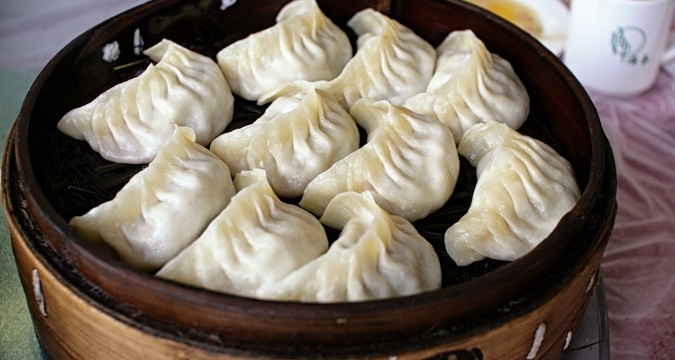
From http://www.dishmaps.com/chinese-duck-and-shiitake-dumplings-jiao-zi/17735

Dumplings were first thought to have been made in the Eastern Han era (25-220 AD). One origin story is that they were first made as a traditional medicine for frostbitten ears. The story goes that a doctor was traveling and noticed that many of the poor people didn’t have the proper clothing for winter. Because of this he gave them lamb dumplings served in a broth in order to keep them warm up until the New Year. Today dumplings are eaten on the New Year to celebrate as well as to keep good health during the New Year. (1) Another reason they are eaten on New Years Eve is because they are thought to look like the currency used during the Ming Dynasty, so they are eaten to bring prosperity in the upcoming year. Many times, a coin is hidden inside one of the dumplings so that one person may have extra luck in the new year. (2)

Today, dumplings are eaten just about any day of the year for any meal. They have spread throughout Asian history, with places like Japan, Nepal and Korea having their own renditions of a stuffed dumpling. However the tradition still remains of eating dumplings on the eve of the Chinese New Year. The importance of the dumpling in China goes back at least 1,700 years where archaeologist found fossilized dumplings in tombs. (3) The fact that people felt the need to be buried with dumplings shows how much this food meant to them.

With how high paced and busy life can be in 2020, it is easy to not think much of food. It is something that gets you through the day, fuel that gets you from point A to point B. It might even seem alien to think of food as meaningful or have importance outside of keeping you alive. Understanding the origin and the stories behind a certain food or dish can help give someone a connection to their food and care more about it. Not only that but it can be a connection between a person and a culture foreign to them; a gateway into their way of life and a way to begin understanding people different from you.

1. https://www.austinchronicle.com/food/2013-02-15/seeking-xlb/

2. https://www.nytimes.com/1995/01/25/garden/dumplings-for-a-lucky-year-of-the-pig.html

3. https://www.thedailymeal.com/archaeologists-ancient-dumplings-xinjiang-china/21615

Sustainability in the Restaurant Industry

One thing that I am torn about is whether or not having restaurants is a good or a bad thing. On one hand they are a great way to bring people together allowing them to be social. They can also help express different cultures and provide immigrant communities with a “taste of home”, or something that is familiar to them in such an unfamiliar place. On the other hand, however, restaurants are extremely wasteful. According to the EPA, America throws out an average of 38 million tons of food per year. The maddening part about this is that most of this waste can be prevented. From first studying food waste in school while pursuing an environmental science minor, to actually seeing it first hand from working in the industry and going to culinary school, this is a big problem and not enough is being done to fix it.

One of the biggest and dumbest causes of food wasting is cosmetics. Tons and tons of food is thrown away by grocery stores and suppliers just because it doesn’t look perfect. Lopsided tomatoes, oblong bananas and discolored apples are all thrown away despite being perfectly fine to eat. This is before the food even gets to the restaurant or into someone’s home. In the restaurant, food is thrown out if a mistake is made or if you order too much and can’t get through it all. Again, perfectly good food thrown away. Additionally, all of this food going into landfills is adding to global climate change. Food in a landfill does not decompose like it normally would. Because of all the trash piled up and inorganic material, food in landfills decomposes anaerobically (without oxygen) and produces methane gas. This gas has been shown to be much worse in terms of the effect that it has on climate change compared to carbon dioxide.

Because of this waste, more food is needed in order to actually feed the global population. This is why anyone who claims that the world is “overpopulated” and that we can’t grow enough food for a larger population is just wrong. Not only can we support a much larger world population with this food system, we do, the excess is just thrown away. Therefore, I think that it is up to restaurants to reduce how much food they throw away and to buy from distributors who don’t waste perfectly good food for frivolous reasons. One way places can do this is to compost the food that they have left over. This is actually what my culinary school did. We had a giant composter in the back of the school that we would dump all the food and paper waste. This was decomposed and used as fertilizer in the school garden, where we grew vegetables that we then used in dishes. Thinking of food waste in this cyclical fashion (waste, compost, fertilizer, food) rather than a linear one (waste, dumpster, landfill) is essential to making restaurants more sustainable. Obviously not every restaurant is going to be able to do this on the scale that my culinary school did, but if smaller places can start thinking in this way, it will considerably improve the situation.

I currently work at a smaller restaurant that definitely does not have the means to compost our food waste, but we are on a block with about a dozen other restaurants, a handful of which we share an alleyway with. We already share a dumpster and recycling bin with these other restaurants, why not a composting machine? It would be a whole lot better for the environment and it could also be lucrative for the restaurants that use it. They could form a cooperative and jointly own the compost machine, they could then sell that compost as fertilizer and make a profit off of it. While this shouldn’t be something for a profit, that’s unfortunately how many people think. As long as we stay in a capitalist system, there will need to be a monetary advantage to fix environmental issues, whether that be food waste or a reduction in carbon emissions.

I want restaurants to be something good. I want them to live up to their potential as a social space where you can enjoy the company of friends or discover new foods and through those new foods, new cultures. A place where you don’t have to worry about whether or not the place you’re eating is practicing a sustainable model or if they’re throwing away tons of food. I want this because at this rate restaurants will be a thing of the past. With global temperatures rising alongside droughts and floods becoming more frequent, food prices are already skyrocketing. Just last summer my school stopped buying celery because droughts in California had killed off fields of them and the price to get them was astronomical. These increasing prices will make it harder and harder for restaurants to stay open, mainly effecting small, family run operations. Urging restaurants to become more sustainable is just a small step in fixing the bigger issue, but I think it could be a vital step to take. If a restaurant demands more sustainable practices from their distributors, that would make the distributors more sustainable in order to keep the business of these restaurants. It would hopefully cause a domino effect, making the entire food industry become sustainable. But that could just be wishful thinking.

Food Nostalgia

What food brings back memories of your childhood? Or just makes you feel contented inside after eating it? Comfort food is something that everyone has, something that has a certain nostalgic value to us that makes us love eating it. The funny part is that to get these feelings, the food itself doesn’t necessarily have to taste good objectively. An example of that from my life is mac n cheese. To me, mac n cheese has to come from a box. The super cheap stuff you buy in stores with the cheese powder, that’s the cream-the-crop to me. I know that there are much better mac n cheeses out there, but because they don’t have the connotation that boxed mac n cheese has, they aren’t as good to me. This is where I think a lot of places go wrong and where a lot of people in general go wrong. We have this assumption that food has a “correct” way to be cooked. Or that people who have studied and cooked with food for a very long time make better food than those who just start out. Food and eating is not just a physical experience, its a cultural and psychological experience as well. It is a psychological experience because while you eat, you make connections with other things that might be going on in your life. Maybe you’re on your first date with your future wife at a crappy Italian restaurant, and that watered down sauce on your spaghetti tastes so amazing because of the memory you associate it with. For me, I love boxed mac n cheese so much because it reminds me of summers as a kid. I remember my mom would make it for my brother and I as a quick lunch before we went outside and played with the other kids in our neighborhood. Culturally it might be different simply because different cultures favor certain kinds of foods to others. So you might have grown up eating something super spicy and love it, even though in the culinary world, super spicy foods aren’t considered that good because it masks other flavors.

When I think of true comfort food, however, it is the food that my grandma would make for us and that my mom learned to make from her. Recipes that were passed down in the family from before we immigrated to America. My great-grandmother was a first generation Polish-American, meaning that she was in the first generation of her family that was born in America. When they moved to America, they brought over traditions from Poland including recipes that have since been passed down to me. These recipes and culinary traditions include kielbasa, pierogi, gołąbki, kluski, oplatki, and paczki. I will go over each of these in following paragraphs. These foods are what I grew up on and whenever I eat them now I feel so happy and content. We didn’t eat these foods all the time, but they were recipes that that were ours, ones that didn’t come from the Betty Crocker cookbook. I think that is why they stick out to me the most, the personal connection that they had with my family and the history behind them gave these foods more meaning.

From https://www.theblackpeppercorn.com/smoked-kielbasa/

Kielbasa, or Polish sausage is probably one of the most well known Polish dishes to most people. My family rarely made this for themselves, as the process was very long and involved, but we bought them from friends who made them by hand. Kielbasa was always on the menu during Christmas and Easter dinners. It was one of my favorite dishes as a kid, especially with the sweet chili sauce my grandma would make to put on top of it. When I think of Easter and Christmas, I don’t really think of ham or turkey or any of the more popular meat choices for those holidays, even though we had them. For me its the kielbasa and chili sauce that I associate with those holidays.

From https://www.youtube.com/watch?v=JZVvQkRWBVw

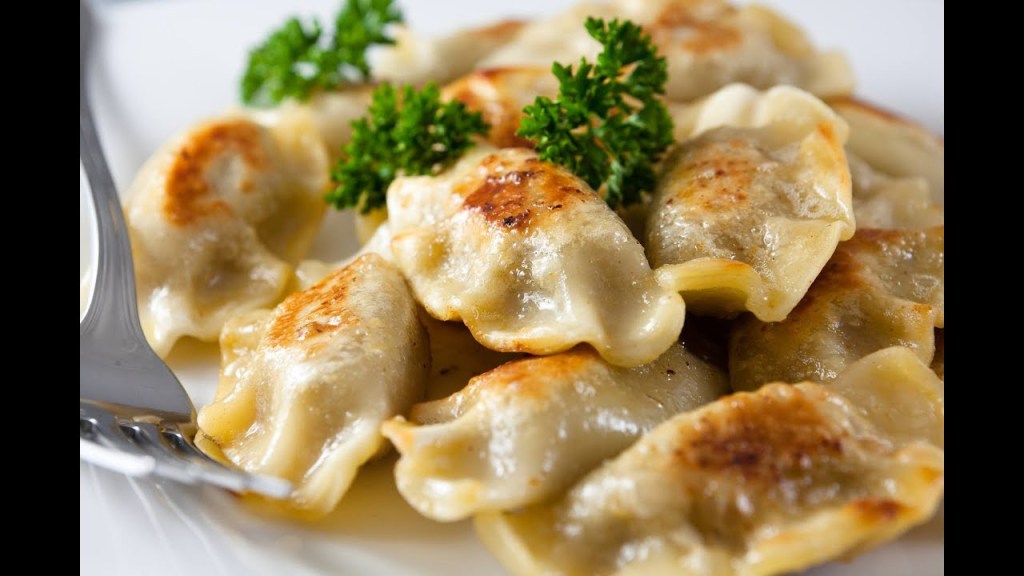
If you knew what a Polish sausage was, there’s a good chance you know what a pierogi is. Pierogi’s stuffed with potatoes were my absolute favorite dish as a kid. We had them both store bought and hand made. It wasn’t until later in my teens that I discovered they could be filled with things other than potato and I had mushroom and sauerkraut pierogis and cheese pierogis. These are very accessible since they are basically just dumplings, however the dough is very specific in that it is heavier and is really what sets them apart from other types of dumplings.

From https://themanwhoatesouthjersey.wordpress.com/2012/01/15/the-polish-american-deli/

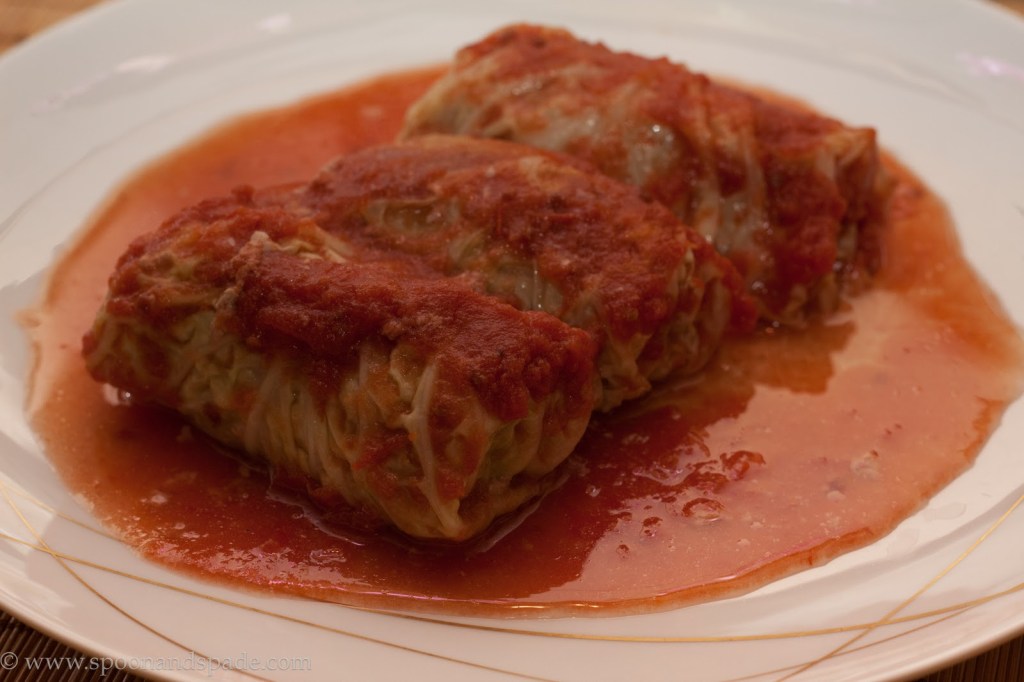
Gołąbki, better known as cabbage rolls, was a dish I had to grow into. I liked almost everything about them as a kid, the ground beef and rice inside, the tomato sauce drizzled over top of them. The only thing that I hated about them was the cabbage wrapped around them. I remember peeling the cabbage off to just eat the insides in the sauce. Because of this, we never really had these all that often when I was younger. As I got older and my taste buds changed, I started to appreciate this dish more and more to the point where it is now my favorite dish.

From https://www.justapinch.com/recipes/side/potatoes/polish-drop-potato-dumplings-cin.html

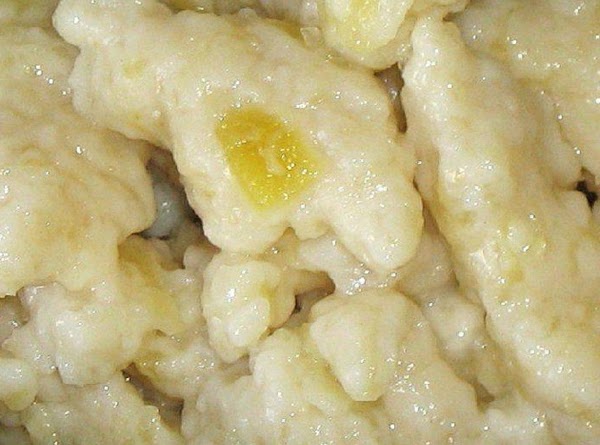
The way my family makes kluski is a little different that what I’ve seen in grocery stores and online. Normally kluski just refers to a potato dumpling, as seen in the picture above. However when we were told “we’re having kluski tonight” it meant a very specific dish. The way we made it was with handmade kluski dumplings that were sautéed with bacon and onions. I enjoyed this dish, but it was my little brother’s absolute favorite Polish dish that we made.

From https://poland.pl/tourism/traditions-and-holidays/christmas-wafer-symbol-reconciliation/

Growing up in a Roman Catholic family, Christmas was always a very important time of year for us. Oplatki is a Polish tradition that emphasizes the importance of Christmas to us. Taken on Christmas Eve, these wafers are the same as the host one would get at mass, but not blessed by a priest. The wafers would have elaborate decorations on them usually depicting the nativity scene. All the adults would split one or two of these wafers amongst each other before eating dinner. The tradition goes that those that the ones you share this wafer with will be the ones you share good times with in the upcoming year.

From https://www.thespruceeats.com/polish-paczki-doughnuts-recipe-1136411

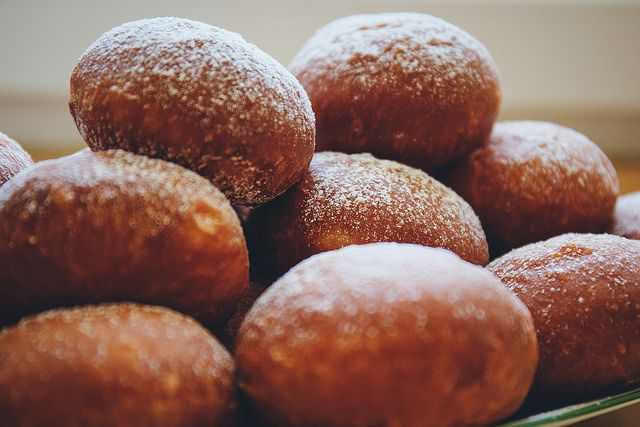
Paczki were some of mine and my brothers favorite treats, but they were only made once a year, Fat Tuesday. It is a tradition to make these fatty, sugary treats on Fat Tuesday since it is the last day before lent, when we would have to fast for 40 days until Easter. Now, as kids we didn’t really fast, we chose one thing to give up for those days (which we usually broke by the end of the first week) but it was a tradition that we kept nonetheless. There are many different recipes for paczki, some are stuffed with jelly or cream and sprinkled with powdered sugar. Ours were just the plain donut, covered with sugar on the outside. You could eat them at room temperature but we always liked them best when they were fresh out the oven or reheated for a couple seconds in the microwave.

Neither my mom or my grandma have ever been professionally trained how to cook. As far as I know, I’m the first one in my family to go to culinary school. But the food that they made me growing up holds more weight in my memory that the best “technically” good tasting food that I’ve had. Food and flavor are both subjective things that are influenced by a lot more than just our taste buds. Where you are, your mood, the memories you’re making all go into your perception of the food you are eating at that time. This isn’t to try and put down or degrade chefs or professional cooks, but merely to dispel the assumption that because you AREN’T a chef or a professional cook doesn’t mean that you’re food can’t be just as good as theirs. And to some people, might even be better.

Design a site like this with WordPress.com
Get started